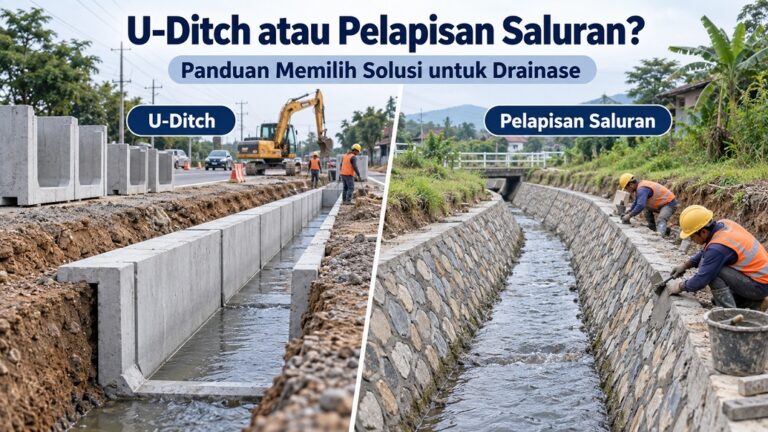
Types of Drainage Channel Lining Materials: Advantages and How to Choose Them
Drainage channels play an important role in managing and directing water to prevent flooding and water accumulation in surrounding areas. However, channels without proper surface protection can experience various problems, including erosion, surface damage, and water leakage. Therefore, selecting the right drainage channel lining material is an important consideration when constructing or rehabilitating a drainage system.
Different lining materials have different characteristics. Concrete, plaster, precast concrete, and geosynthetic-based materials can all be used depending on the conditions and requirements of a project. Selection should not be based solely on cost, but should also take into account soil conditions, water flow rates, channel geometry, site accessibility, and installation methods.
Why Do Drainage Channels Need Lining?
Channels constructed without protective lining can be more vulnerable to erosion caused by flowing water. Under certain conditions, continuous water flow can gradually erode the soil along both the channel bed and side slopes.
Channel lining can help protect the surface from the effects of water flow while maintaining the shape and stability of the channel. In some applications, lining is also required to help reduce water seepage into the surrounding ground.
These requirements make it important to select a lining material that is appropriate for the channel conditions and the objectives of the project.
Types of Drainage Channel Lining Materials
1. Plastering
Plastering is one method that can be used to line channel surfaces. It is a relatively common approach and can be applied to channels under suitable conditions.
However, plaster linings can develop cracks or deteriorate if the surface conditions, workmanship, or surrounding environment are unsuitable. In irrigation systems, for example, plaster linings may require maintenance when surface damage occurs.
Therefore, this method should be selected based on the channel conditions and the required level of long-term durability.
2. Conventional Concrete
Concrete is widely used for channel construction because of its strength and ability to create a durable, rigid surface.
Concrete lining can provide protection for the channel surface and help maintain the channel’s shape. However, conventional concrete construction typically involves several stages, from material preparation and site preparation to pouring and curing.
Labor requirements, material quantities, equipment, and access to the site should also be considered before selecting this method.
3. Precast Concrete or U-Ditch
U-Ditch is a type of precast concrete drainage channel that can be used in drainage systems. Because it is manufactured as ready-to-install sections, this method can simplify installation compared with constructing concrete channels directly on site.
However, using U-Ditch also requires consideration of site conditions, transportation access, element dimensions, and the requirements for connections between individual sections.
Therefore, U-Ditch can be an effective option for projects where its construction characteristics and installation requirements are compatible with the site conditions.
4. Concrete Canvas
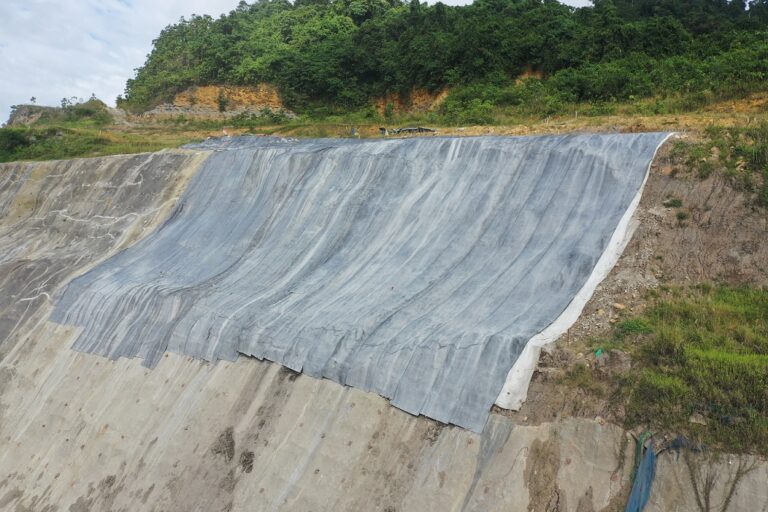
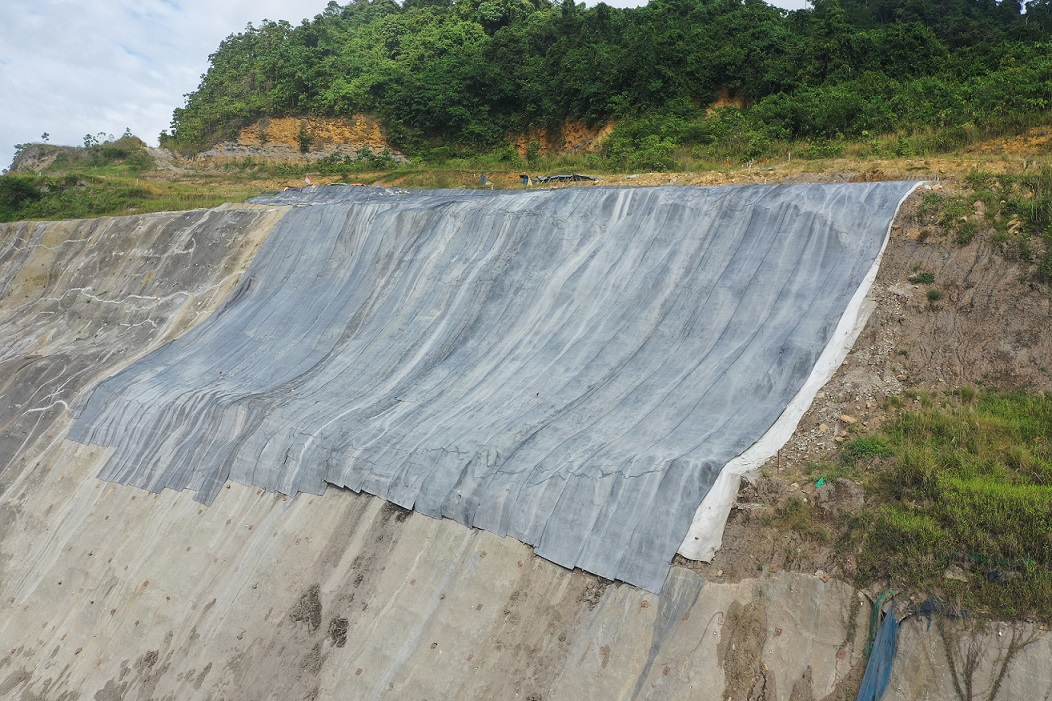
In addition to conventional materials, geosynthetic-based alternatives such as Concrete Canvas are also available. This material is classified as a Geosynthetic Cementitious Composite Mat (GCCM), a composite material containing a cementitious mixture that hardens after hydration.
Concrete Canvas is supplied in rolls, allowing it to be transported to the site and deployed across the area requiring protection. Once installed and hydrated, the material forms a concrete layer that can be used for various surface protection applications.
Concrete Canvas can be used in a range of applications, including channel and waterway lining. PMI also provides Concrete Canvas products for erosion control and surface protection applications.
How to Choose the Right Channel Lining Material
Not every lining material is suitable for every drainage channel. Several factors should be considered before making a selection.
1. Soil Conditions
The type and condition of the soil surrounding the channel can influence the choice of lining material. Soils that are highly susceptible to erosion require greater attention to surface protection.
Channel slope and surface stability should also be evaluated to ensure that the selected material can be properly applied under the existing conditions.
2. Water Flow Rate and Velocity
Water flow rate and velocity are important considerations when selecting a lining material. Channels carrying higher volumes or faster-flowing water may require surface protection with characteristics suitable for resisting hydraulic forces.
Therefore, the material should be selected based on the project’s hydrological conditions and technical requirements rather than simply on the type of channel.
3. Seepage Control Requirements
In some projects, channel lining is required not only to protect against erosion but also to help control water seepage.
When reducing channel permeability is a primary objective, the permeability characteristics of the lining material should be an important consideration. Certain types of Concrete Canvas, for example, feature a backing layer designed to provide very low permeability.
4. Channel Shape and Contours
The shape of the channel can also determine which lining method is most practical. Channels with irregular contours or specific geometries may require materials that can conform effectively to the surface.
Sheet- or roll-based materials can provide greater flexibility in certain conditions because they can conform to the surface before the material hardens.
5. Site Accessibility
Logistics can often be a challenge in drainage projects, particularly when the work area is difficult to access.
Conventional construction methods may require large quantities of materials to be transported to the site. Meanwhile, materials supplied in roll form, such as Concrete Canvas, can provide an alternative in certain conditions because they can be more easily transported and mobilized to the work area.
6. Installation Time
Construction time should also be considered. Conventional concrete methods require several stages of work on site, while certain materials may offer different installation processes.
However, actual installation time depends on various factors, including the size of the area, surface conditions, available labor, site accessibility, and the installation method used.
Concrete Canvas as an Alternative Channel Lining Material
Concrete Canvas can be an alternative for projects requiring channel surface protection through an installation method that differs from conventional concrete construction.
The material is deployed across a prepared surface, followed by securing and hydration. Once hardened, it forms a concrete-based surface that can help protect the channel against erosion.
In practice, Concrete Canvas is not necessarily a direct replacement for every type of channel construction. Its suitability should still be evaluated based on project conditions, channel design, flow requirements, site accessibility, and other technical specifications.
For larger-scale water channel applications, PMI also offers CCX-M, which is designed for applications such as water channels and irrigation systems. The product features an LLDPE backing that helps provide low permeability.
Conclusion
Selecting the right drainage channel lining material should be based on the specific conditions and requirements of each project. Plastering, conventional concrete, U-Ditch, and geosynthetic-based materials such as Concrete Canvas each have different characteristics and installation methods.
Factors such as soil conditions, water flow rate, erosion risk, seepage control requirements, channel geometry, site accessibility, and installation time should be considered before selecting a material.
Concrete Canvas can be an attractive alternative, particularly for projects requiring flexible installation methods and protection against channel surface erosion. However, material selection should ultimately be based on the project’s technical requirements and actual field conditions.
Prima Minechem Indonesia provides Concrete Canvas solutions for various surface protection and erosion control applications. If you are looking for lining materials for drainage channels, waterways, irrigation systems, or other erosion control applications, your project requirements can be assessed first to determine the most suitable solution for the specific site conditions and application.