
Case Study Information
Jenis Proyek: Pelapisan Saluran dan Slope Protectiom
Jenis Proyek (lainnya): Pertambangan
Tanggal Mulai Proyek: Oktober 2025
Tujuan Proyek:
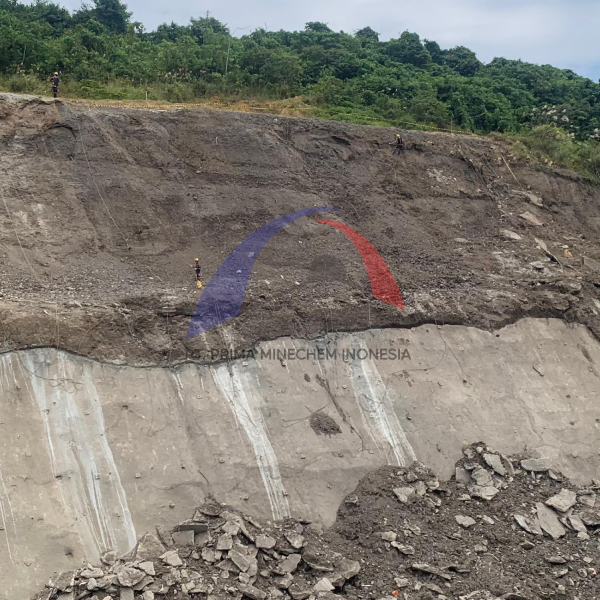
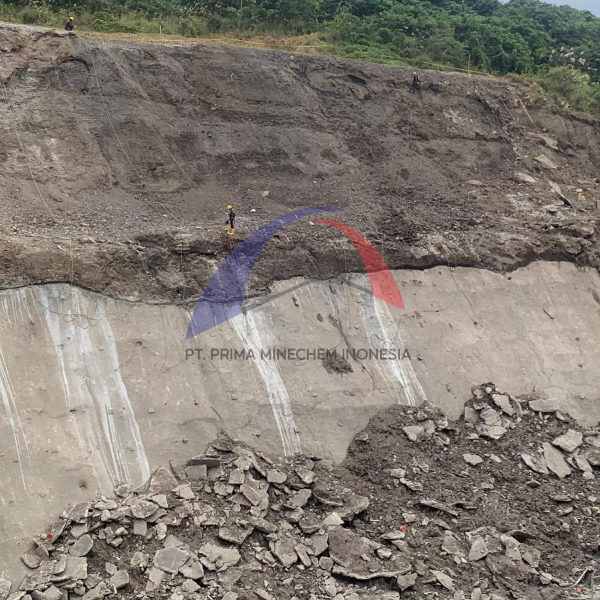
Tujuan project adalah untuk menanggulagi atau menutup kembali lereng yang ter ekspose akibat lapisan shotcrete yang runtuh di area hauling road.
Lokasi Proyek: Kaliorang, Kalimantan Timur
Jumlah Installer: 7 orang
Jumlah Concrete Canvas yang Digunakan: 2375 m²
Format Roll: Bulk Roll
Tipe / Ketebalan: CCX-M
Metode Pemasangan (Layup): Vertical
Installation Process
Equipment used
- Spreader beams
- Excavator
- Cutter/utility knife
- J-Pin 40 cm
- 30 mm stainless steel screws
Alternatives and Reasons for Choosing Concrete Canvas
Shotcrete was considered because it was previously used on existing slopes. However, after about two years, the shotcrete layer cracked in several areas, causing the concrete to crumble and reducing the effectiveness of the slope protection. Therefore, Concrete Canvas was chosen as an alternative due to its flexibility, ability to follow the contours of undulating slopes, and quick installation without complex equipment. Furthermore, the Concrete Canvas installation method does not require road closures, making it ideal for slopes located near operating hauling roads.
Environmental Conditions
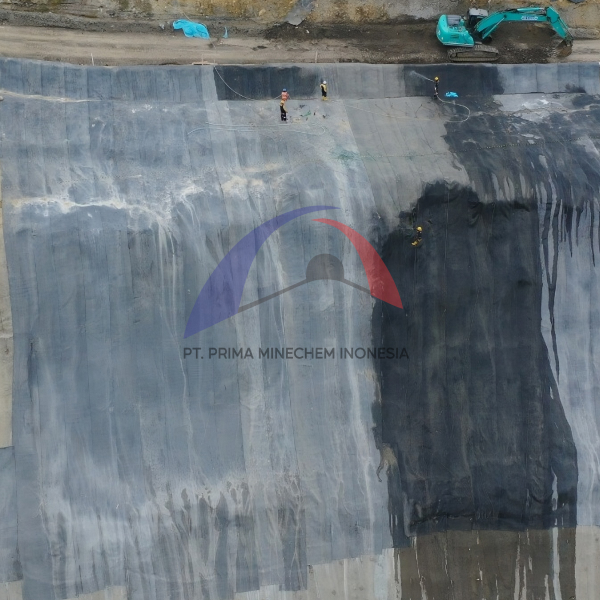
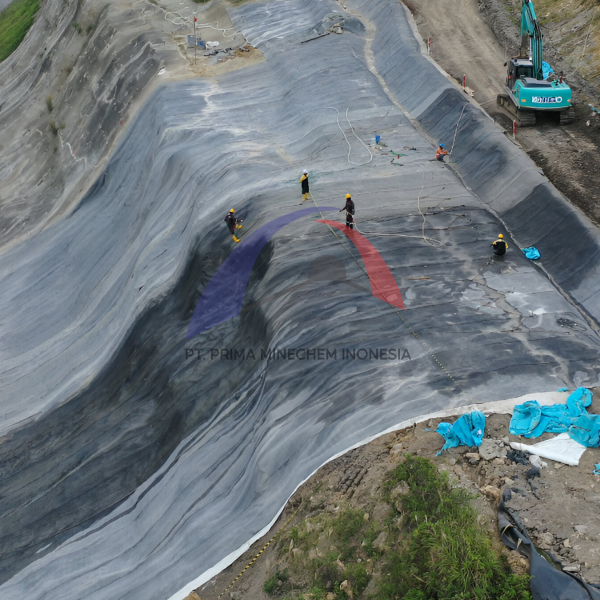
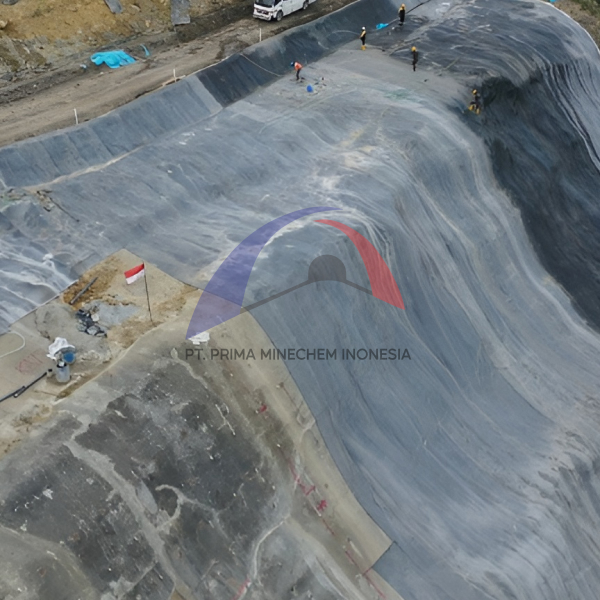
The project was carried out in a hauling road area with a slope height of up to 30m.
Land Preparation
- Cleaning cracked shotcrete layers
- Releveling the land contour
Installation, Bonding, and Sealing Methods
Concrete Canvas CCX-M is installed vertically with overlap joints. Fastening is done using 30 mm stainless steel screws spaced 10 cm apart on each overlap. Additionally, 40 cm J-Pins are installed every 3 m along the slope.
Hydration Method
The hydration process is carried out using a hose connected to a water pump, with the water source coming from a nearby pond around the project site.
Installation Duration
Installation productivity reaches around 400–500 m² of Concrete Canvas per day.
Project Success
The project was deemed successful, due to its rapid installation and the absence of disruption to mining operations on the hauling road.