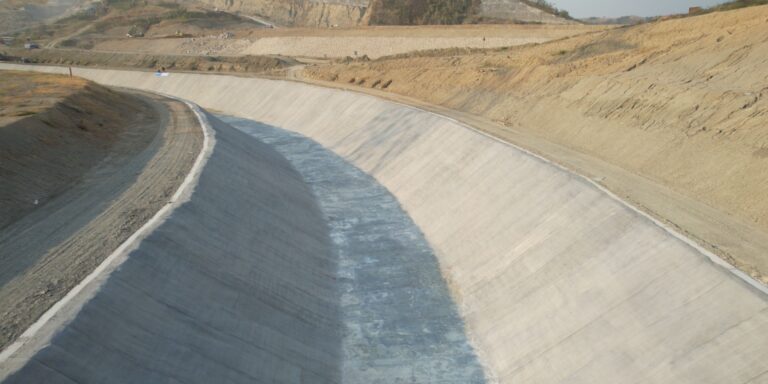
Concrete Canvas, part of Type II Geosynthetic Cementitious Composite Mats (GCCM) technology, can be used in various applications, including protecting against surface erosion. But did you know that Concrete Canvas can also be used to protect “protective” structures?
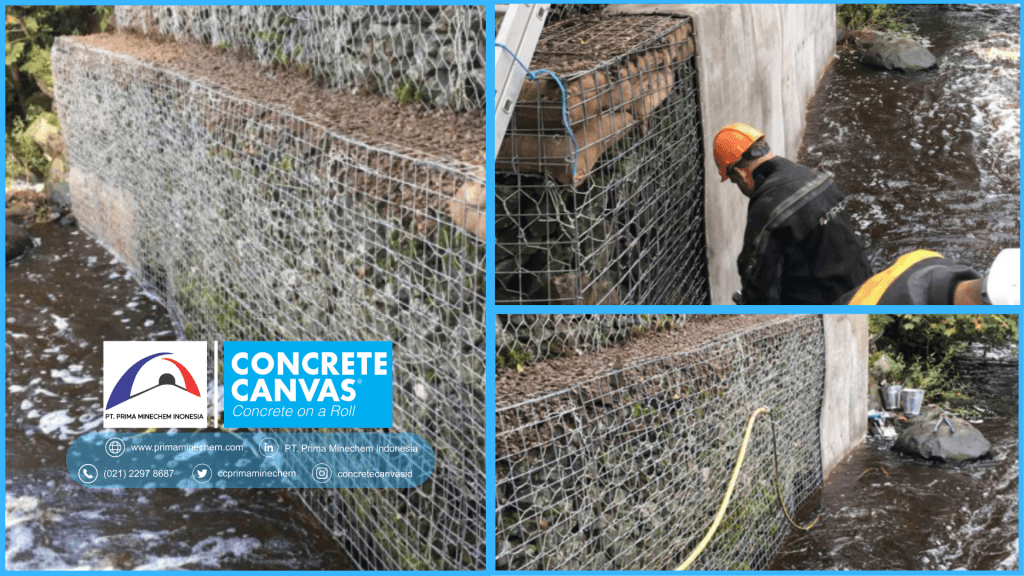
Gabions are made of woven heavy-duty zinc-coated wire with a double twist, forming a hexagonal shape, tightly tied between the sides. The interior is filled with large stones to prevent erosion. They are typically installed on cliffs or riverbanks undergoing normalization work and to mitigate erosion caused by river currents.
However, gabions have a drawback in terms of corrosion resistance. Galvanized steel wire is not suitable for use in areas with high salt or acid water content, such as seashores, as it accelerates the corrosion process of the wire ties. Furthermore, the gabions can be damaged by the rapid flow of the river, which erodes the gabion installation.
Concrete Canvas is the perfect material to protect gabions from damage caused by corrosion of their binding wires. It has been tested and certified to be resistant to chemicals, acids, and bases. It has also been tested to withstand erosion from flow velocities of up to 8.6 m/s, making it the perfect choice for protecting gabions from corrosion.
In October 2019, Concrete Canvas was used to protect gabions for long-term protection along the River Almond in Lothian, Scotland. Gabions are used to protect rivers from erosion and control flooding, but over time, these gabion structures have degraded due to corrosion and erosion in the River Almond.
Concrete Canvas was chosen for its speed of installation and ease of installation using simple tools.
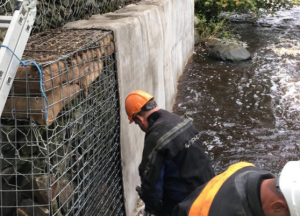
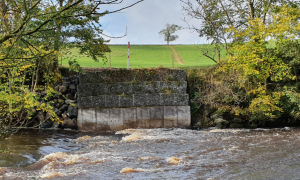
The use of Concrete Canvas has proven to be an excellent solution for the Gabion Protection project, providing riverbank protection to prevent scour and erosion of the gabion structure.
The use of Concrete Canvas reduces the need for further disruptive work and has also met environmental regulatory approval due to its effectiveness and low environmental impact on the river.
Don’t hesitate to contact our Concrete Canvas team for a consultation and further information.