Challenge
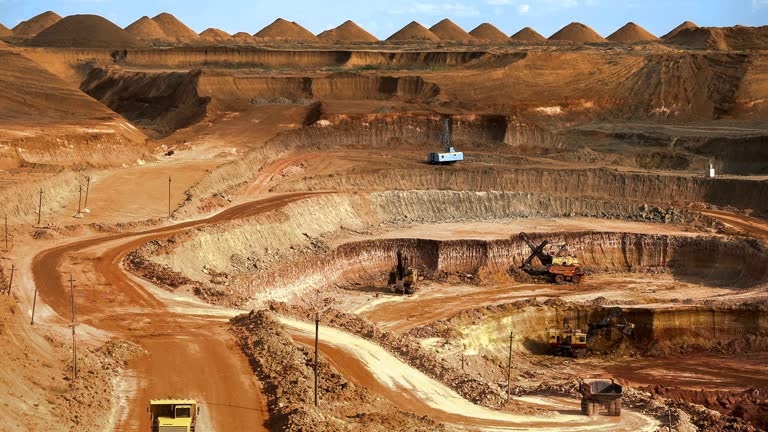
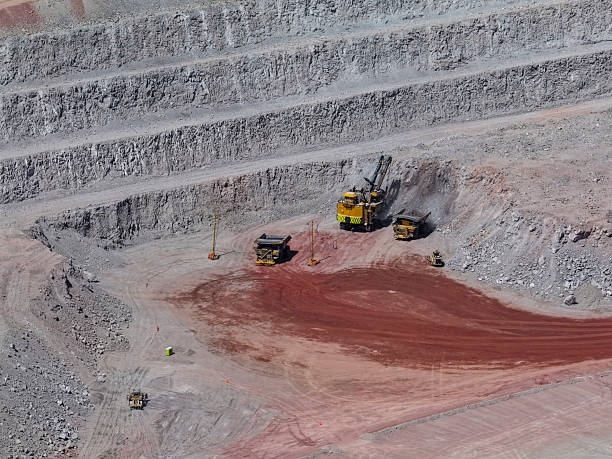
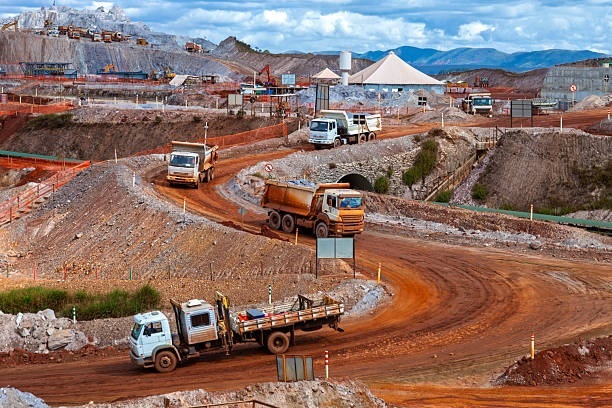
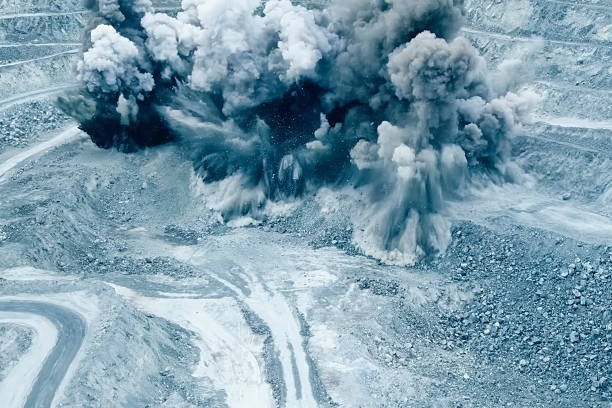
In the coming decades, mining resources are predicted to focus on open-pit mining, particularly copper. This necessitates an in-depth review to evaluate air decking methods in blasting and their impacts. This trial aims to verify the consistency and feasibility of air decking use, ensuring safety and target suitability after the blast.
With the potential for worker safety risks and commercial losses, such as wasted blasting, the instability of the mine wall is a significant issue. Therefore, mine site selection is crucial to improve existing trim blasting techniques with a proven conventional trim blast approach, which involves reducing the explosive weight and increasing the stemming height.
Observed negative impacts, such as damage to the surrounding mining area and cracks in the pit walls, were caused by explosive gases that escaped during blasting.
Solution
To minimize damage to the mine walls, air decks were implemented, limiting the movement of explosive gases. This approach utilizes mechanical plugs, but they are difficult to implement due to inconsistent operation and the need for intensive manual handling. This is due to the variation in blast hole diameters, from 7 ⅞” to 12 ¼” due to drill availability.


With the goal of efficiency and flexibility, the adoption of MTi BLASTBAG™ was implemented. The hole diameters varied, from 7 ⅞” to 12 ¼”. The trial process involved two experimental blasting with MTi Group BLASTBAG™ .
Both blasting operations were conducted on a single geotechnical unit to ensure consistent and interpretable results. The blasting results were evaluated using condition factors, including quantitative scoring of the hole wall condition based on factors such as block condition, embankment cracks, and crest condition. The success criterion was set at 70% for each factor.
In both experimental blasting runs, air decks with BLASTBAG™ were applied to the batter rows . The 7 ⅞” row contained 3.5 m of explosive with 7 m of stemming, while the production row contained 3.5 m of explosive and 8 m of stemming. The placement of the air deck opened up space for the explosive before it traveled through the rock, creating an even energy distribution. This limited the mobility of explosive gases, reduced ion expansion in the fractures, and ultimately reduced the impact damage to the hole walls.
Results
Evaluation of both experimental blasts demonstrated satisfactory results against the established condition and design factors. In the first blast, the condition score reached 70%, while the design score reached 97%. In the second blast, the condition score reached 73%, and the design score reached 91%. Both results far exceeded the established success criteria.
This success was further confirmed by the post-blast excavation results, which showed no visible cracks or damage to the hole walls. This demonstrates significant improvements in blasting techniques, particularly in their ability to more effectively manage the energy of explosive gases.
Contact us at MTi Group – PT Prima Minechem Indonesia today to learn more about Blastbag™. Join hundreds of satisfied customers who have experienced improvements in their mining operations. Together, we can achieve a smarter, safer, and more profitable future for blasting.