Climate change and the current environmental crisis have become one of the greatest challenges facing humanity. One of the main contributors to global warming is greenhouse gas emissions, which largely come from the industrial, transportation, and construction sectors.
In efforts to reduce carbon footprints and move towards sustainability, innovation in construction technology is crucial. One breakthrough that has attracted attention is the use of Concrete Canvas.
What is Concrete Canvas ?
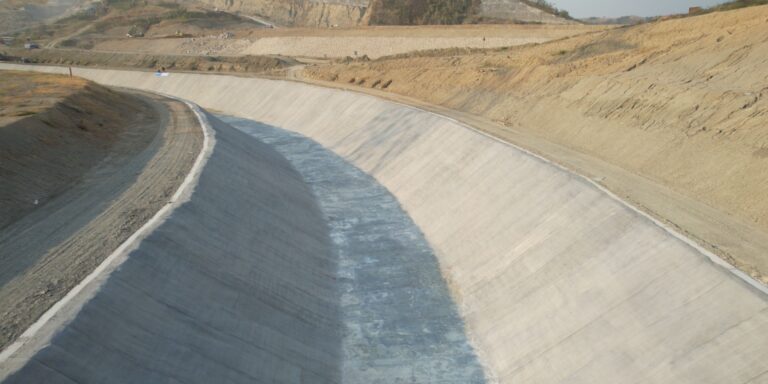
Concrete Canvas is an innovative material that combines dry concrete technology with a geotextile layer that hardens after hydration to form a strong, dense concrete layer. This technology was first developed in the early 2000s by the UK-based company Concrete Canvas Ltd.
Benefits of Concrete Canvas on Carbon Footprint
1. Reduced Carbon Emissions : One of the most significant benefits of using Concrete Canvas is its potential to reduce carbon emissions. Traditional concrete production processes generate significant carbon emissions, as cement production relies on fossil fuels. However, Concrete Canvas uses a dry concrete mix that requires less water than conventional concrete, reducing energy consumption and associated carbon emissions.

Based on tests conducted by Ricardo Energy Environment (REE), Concrete Canvas produces 62% less carbon than conventional concrete or cast concrete equivalent to K-200.

2. Potential to Reduce Construction Waste : Traditional construction often produces significant waste. In projects using Concrete Canvas, no residue or waste is produced by Concrete Canvas.
3. Improved Land Reclamation : Concrete Canvas opens up opportunities for more efficient reclamation and restoration of degraded land. In some cases, this technology can be used to rehabilitate eroded land and reduce environmental damage.
4. Construction Efficiency : Using Concrete Canvas can also reduce the time and labor required for construction projects. The simple and quick installation process reduces the need for heavy equipment and saves fuel used by construction machinery. Thus, reducing the carbon footprint generated during the construction process.
5. Reliability and Durability : Structures made from Concrete Canvas are proven to be strong, durable, and resistant to weather damage. This reliability translates into a longer structural lifespan, reducing the need for periodic replacement or repairs, thus reducing the carbon footprint of repair activities.
Concrete Canvas offers many benefits and provides new hope in achieving the goal of reducing carbon footprint and realizing a more sustainable future for future generations.
Don’t hesitate to contact our Concrete Canvas team for a consultation and further information. Together, we can solve erosion problems more safely and reliably!