U Ditch: Definition, Functions, Benefits, and Applications in Drainage Systems
Drainage systems play a vital role in conveying stormwater and surface runoff to prevent flooding and water accumulation. In residential areas, roadways, industrial facilities, and infrastructure projects, poorly designed drainage channels can lead to localized flooding, erosion, and pavement deterioration. One of the most commonly used solutions for constructing these channels is the U Ditch.
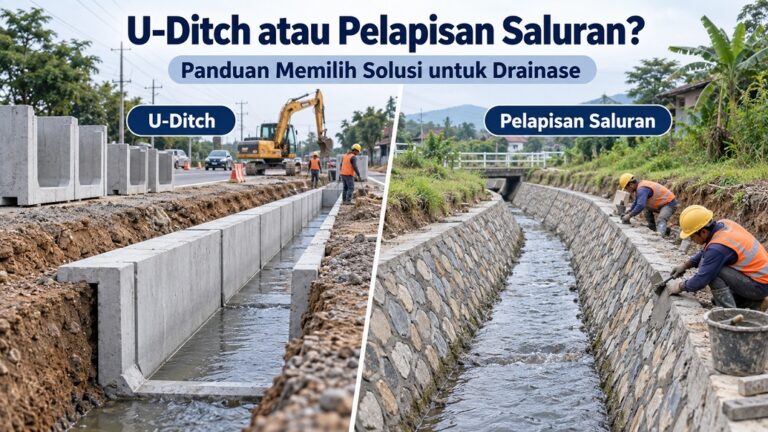
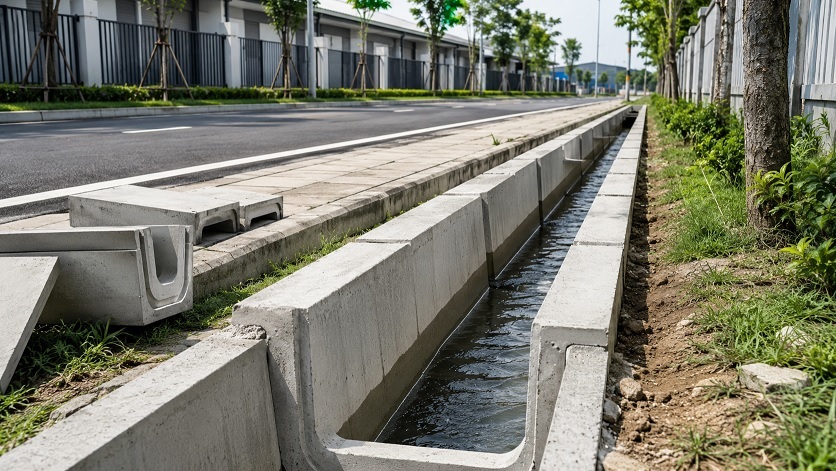
A U Ditch is a precast concrete drainage channel with a cross-sectional shape resembling the letter “U.” It is manufactured in a controlled factory environment using standardized molds and specified concrete grades before being transported to the project site for installation. Because of its modular design, a U Ditch can significantly accelerate drainage construction compared to conventional cast-in-place concrete methods.
What Is a U Ditch?
A U Ditch is a precast reinforced concrete element designed to function as an open drainage channel for conveying water. Depending on the application and installation location, the channel may be left open or fitted with precast concrete covers. U Ditches are widely used in road drainage systems, residential developments, commercial areas, industrial facilities, warehouses, and irrigation networks.
The U-shaped cross-section allows water to flow along the channel invert while the sidewalls contain the flow within the intended drainage path. Most U Ditches are manufactured using reinforced concrete to withstand earth pressure and external loads surrounding the channel.
The dimensions of a U Ditch should be selected based on factors such as design flow rate, channel slope, soil conditions, installation depth, and the loads acting on or around the drainage system.
Functions of U Ditches in Construction
The primary function of a U Ditch is to provide a controlled pathway for stormwater and surface runoff. It directs water toward main drainage channels, retention ponds, rivers, or other designated discharge points.
In road construction projects, U Ditches help minimize water accumulation along roadways. Standing water can penetrate pavement layers and accelerate pavement deterioration. In industrial facilities, U Ditches can also be used to manage surface runoff, provided that the discharged water is integrated into the site’s approved drainage and treatment system.
U Ditches are also commonly installed in residential and commercial developments. When fitted with concrete covers, they can be safely placed adjacent to sidewalks, parking areas, or pedestrian walkways. The type of cover and its load-bearing capacity should be selected according to the specific site conditions.
Advantages of Using U Ditches
One of the primary advantages of U Ditches is that they are manufactured in a factory-controlled environment. Their dimensions, reinforcement, geometry, and concrete quality can therefore be maintained more consistently than cast-in-place concrete, which is often influenced by site conditions.
Installation is relatively fast because contractors do not need to construct continuous formwork or wait for freshly poured concrete to cure. Once the excavation and bedding layer have been prepared, individual U Ditch sections can be lifted into position and connected sequentially.
The relatively smooth internal surface promotes efficient water flow while making sediment removal and routine maintenance easier. However, because precast concrete units are relatively heavy, transportation and installation often require lifting equipment and specialized vehicles.
Key Design Considerations
Hydraulic capacity is one of the most important design considerations. A channel that is too small may overflow during heavy rainfall, while an oversized channel may unnecessarily increase construction costs and occupy excessive space. The required flow capacity should be determined based on the drainage catchment area, rainfall intensity, surface characteristics, and the intended discharge route.
Contractors should also evaluate the concrete strength, reinforcement details, joint conditions, and the load-bearing capacity of any channel covers. A U Ditch installed in a landscaped area, for example, is subjected to very different loading conditions than one located within an industrial facility carrying heavy vehicle traffic.
Routine maintenance should also be incorporated into the drainage management plan. Debris, sediment, leaves, and other materials can reduce channel capacity over time. Adequate access for inspection and cleaning should therefore be provided to ensure long-term drainage performance.
U Ditch Installation Process
Installation begins with surveying and establishing the channel alignment and elevation. Proper elevation differences create the longitudinal slope required to maintain water flow. Errors during this stage can result in standing water or excessive sediment accumulation.
The excavation is then carried out according to the project dimensions. The excavation base is compacted, followed by the placement of a sand bedding or leveling layer in accordance with the project design. A stable foundation is essential to prevent individual channel sections from settling or shifting after installation.
The U Ditch units are subsequently lifted into place in sequence. The alignment and elevation of each section are carefully checked to ensure that the joints remain properly aligned. Joint gaps should be treated using appropriate sealing methods to help minimize leakage and prevent soil infiltration.
After installation is completed, the sides of the channel are backfilled and compacted in stages. Concrete covers may then be installed where the channel requires protection or where surface access is needed.
Channel Lining Solutions from Prima Minechem
PT Prima Minechem Indonesia supplies Concrete Canvas solutions for construction, mining, irrigation, and infrastructure protection projects. Established in 2012, Prima Minechem is the exclusive distributor of Concrete Canvas in Indonesia.
For contractors planning the construction or rehabilitation of drainage channels, the selection between U Ditches, cast-in-place concrete, and rolled channel lining systems should be based on the specific requirements and site conditions of each project.
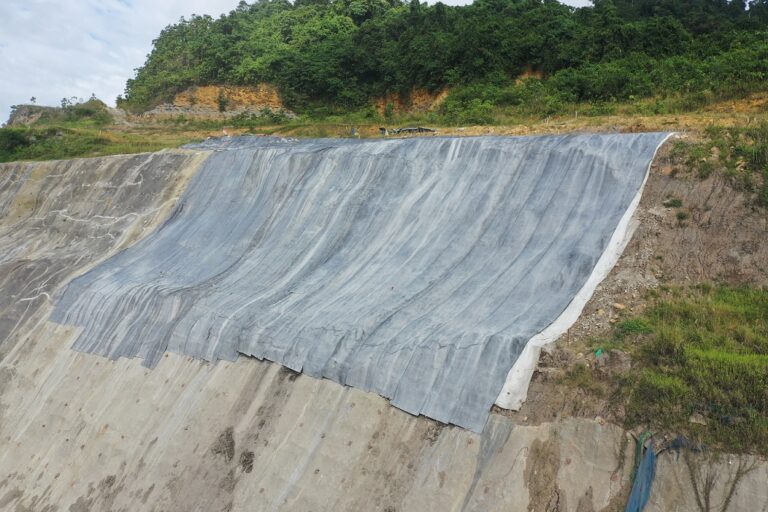
Concrete Canvas supplied by Prima Minechem can be considered for existing drainage channels, irrigation canals, remote project locations, or sites where transporting precast concrete units is challenging. Before hydration, the material remains flexible, allowing it to conform to complex surface profiles and irregular geometries.
Consult the Prima Minechem team regarding your project’s surface conditions, flow rate, abrasion level, seepage control requirements, and site accessibility. Conducting a technical evaluation from the outset helps determine the most appropriate solution for channel construction or rehabilitation based on the project’s specific needs.