Mining Blasting Equipment and Their Functions You Should Know
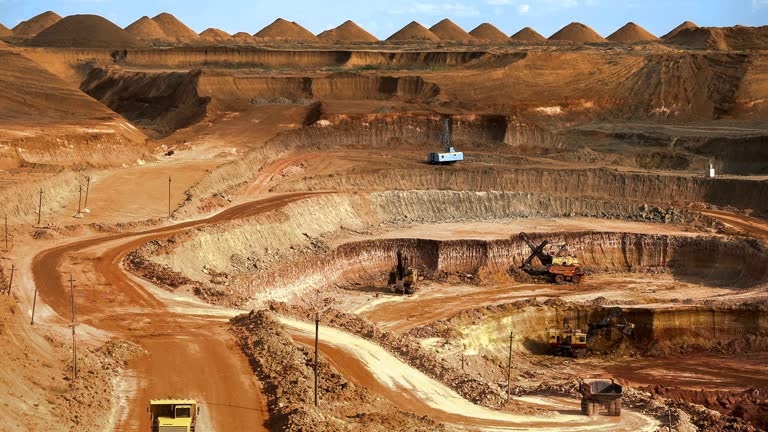
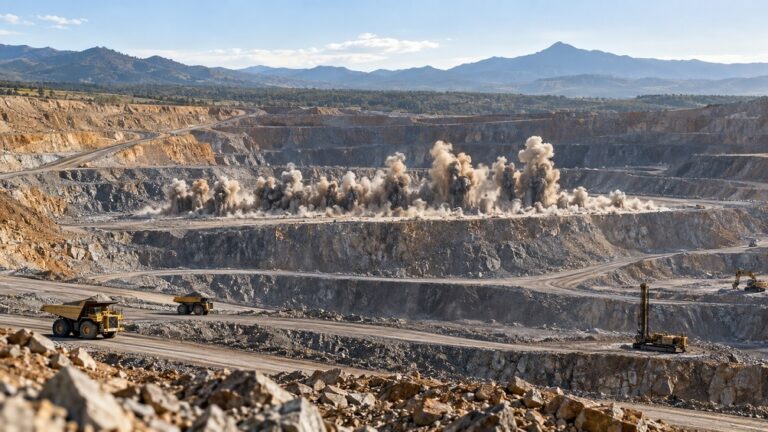
Blasting is an important part of mining operations, particularly when hard rock masses need to be broken before the material can be excavated, loaded, and transported. However, blasting does not rely solely on explosives. Various types of mining blasting equipment are used to support drilling, hole measurement, blast hole protection, area safety, and post-blast evaluation.
In practice, blasting must be planned and carried out by personnel with the appropriate competence and authorization in accordance with applicable regulations. This is important because blasting activities can create risks such as flyrock, ground vibration, airblast, explosive gases, and dust. OSMRE also considers blast design, initiation systems, impact control, warning signals, and area control to be important components of a blaster’s competency.
To better understand the process, here are several categories of equipment commonly associated with drill & blast operations and their respective functions.
1. Blast Hole Drilling Equipment
Before blasting takes place, the rock must first be drilled to create blast holes according to the technical design.
Drilling equipment is an essential part of the initial stage of drill & blast operations. The selection of drilling machines and hole configurations depends on the rock conditions and mine design. However, the quality of the work is not determined solely by the machine’s ability to create holes.
The position, depth, and condition of the blast holes must also be controlled because these holes form an important part of the blasting design. OSMRE includes blast hole design and layout as key aspects of blaster training and certification.
2. Blast Hole Measurement Equipment
After drilling, measurement equipment is required to help inspect the condition of the holes.
Measurement is important because actual field conditions do not always match the initial design. Information about the blast holes can help the team determine whether the available holes meet the requirements of the operation before proceeding to the next stage.
In the MTi Group drill & blast accessories portfolio marketed by Prima Minechem, products such as MitiMeasure and Surveyrope are available for borehole measurement applications. Prima Minechem also emphasizes the importance of measurement accuracy as part of drill & blast operations.
3. Collar Protection
The upper section of a blast hole, or the collar, needs to be protected to prevent the hole from being easily disturbed before use.
Rainwater, drilling debris, or small rocks around the surface can enter the hole. Such conditions may create problems during subsequent operations.
With appropriate hole protection, the condition of the blast hole can be better maintained before the next stage of the process.
4. Blasthole Liners
Under certain conditions, blast holes may also require a liner or protective layer.
A blasthole liner is installed as part of blast hole management and can help provide a barrier between the explosives and the surrounding rock conditions or environment.
The selection of a liner should be adapted to the characteristics of the blast hole and the technical requirements of the project.
5. In-Hole Accessories
There is also a category known as in-hole accessories, which refers to equipment installed as part of the configuration inside a blast hole.
The use of these accessories must follow the technical blasting design and may only be carried out according to established work procedures by authorized personnel.
6. Air Deck Equipment
Blasting operations also involve the concept of an air deck, which uses an air space as part of the blast hole configuration to help manage the distribution of blasting energy.
However, an air deck configuration cannot be applied arbitrarily. Its design must take into account rock conditions, hole characteristics, fragmentation targets, and technical calculations performed by competent drill & blast personnel.
7. Delineation and Area Safety Equipment
Blasting requires clear area control. Work boundaries, personnel access routes, and restricted zones must be easily identifiable.
Therefore, delineation and marking equipment are also important supporting components of blasting operations.
Prima Minechem, for example, lists Reflectabunt, a reflective accessory designed to help make demarcation lines more visible in work areas.
Safety aspects such as warning signs, signals, and site control are also part of the blasting safety competencies emphasized in OSMRE’s blaster training programs.
8. Monitoring and Evaluation Equipment
Blasting operations do not end once the detonation has taken place. The results and impacts need to be evaluated.
Monitoring may include rock fragmentation and blasting area conditions, as well as safety parameters such as ground vibration and airblast, where required. This is important because blasting impacts must be controlled to prevent risks to workers, facilities, and surrounding areas.
The resulting evaluation data can then be used as input for improving the design and execution of subsequent drill & blast operations.
Why Is Supporting Blasting Equipment Important?
The list of mining blasting equipment above demonstrates that blasting is a much more complex process than simply detonating explosives.
Measurement equipment helps ensure that blast hole conditions are properly identified, while collar protection and liners help maintain the condition of the holes. In-hole accessories support technical configurations according to the blasting design. Meanwhile, delineation and monitoring equipment contribute to safety control and post-blast evaluation.
Therefore, the quality of the accessories used should be considered alongside the blasting design, procedures, workforce competency, and actual mine conditions.
By understanding the function of each type of equipment, mining companies can determine solutions that are appropriate for their operational requirements and technical designs. For drill & blast accessory requirements, consult the project conditions with the Prima Minechem team to ensure that the selected MTi Group products are suitable for the intended application and work requirements.