Understanding Mining Blasting Methods and Factors Affecting Their Results
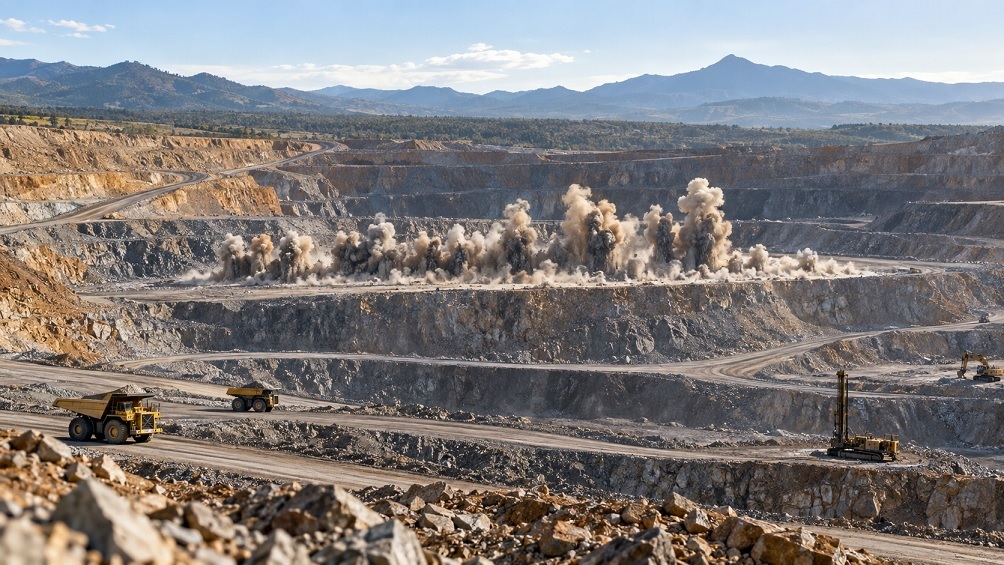
Blasting is one of the key stages in mining operations, particularly in the excavation of hard rock materials. Through blasting, rock masses can be fragmented into more manageable sizes, allowing loading, hauling, and material processing to be carried out more efficiently.
In practice, mining blasting methods involve more than simply using explosives. The success of a blasting operation is influenced by various factors, including rock characteristics, blasthole conditions, work area design, and the selection of appropriate supporting equipment. Therefore, blasting activities require proper technical planning, execution, and supervision.
What Is Mining Blasting?
Mining blasting, or blasting, is the controlled process of breaking rock masses using energy generated by explosives. The primary objective is to achieve rock fragmentation that meets the requirements of subsequent mining operations.
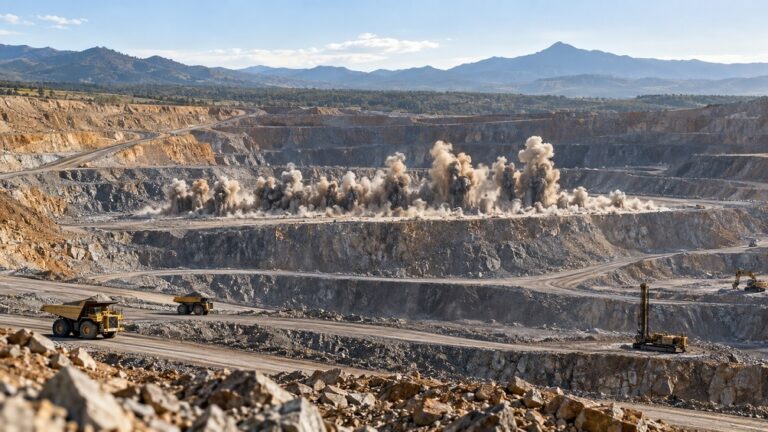
In open-pit mining, blasting is commonly used to assist with rock excavation, such as in bench areas. Meanwhile, in underground mining, blasting can be part of the development process for creating or extending underground openings.
A successful blasting operation is not simply measured by whether the rock has been broken. Fragmentation quality, post-blast conditions, and the suitability of the results for subsequent processes are also important considerations.
Understanding Mining Blasting Methods
Blasting methods can vary depending on mining conditions, rock characteristics, work design, and the objectives of the excavation.
1. Blasting in Open-Pit Mining
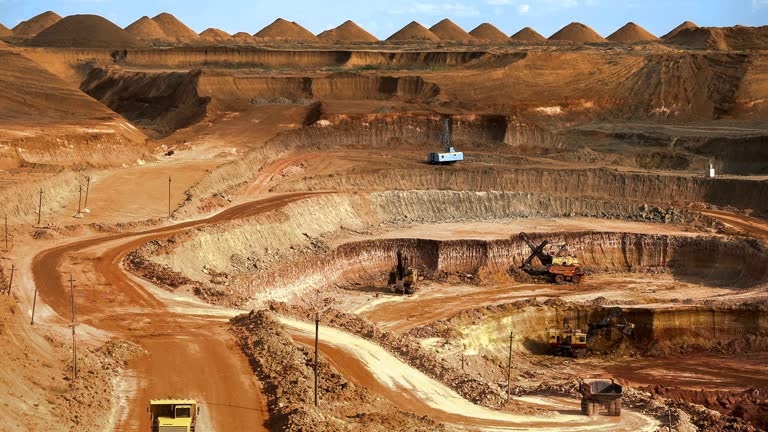
In open-pit mining, blasting is generally carried out in rock areas that have been prepared for excavation. One common application involves the formation or excavation of benches.
This method requires consideration of the geometry of the work area and the characteristics of the rock mass. The desired outcome is fragmentation that supports efficient loading and hauling operations.
2. Blasting in Underground Mining
Underground mining presents more confined working conditions, resulting in different blasting requirements. Blasting can be used for the development of tunnels, drifts, and other underground openings.
In addition to achieving the desired rock fragmentation, the operation must also consider the stability of the excavation and surrounding conditions. Therefore, underground blasting requires careful consideration of geological conditions and excavation design.
3. Blasting for Mine Development
Blasting can also form part of mine development activities. Its purpose may include opening new mining areas, developing access routes, or carrying out other work that requires the removal of rock material.
The blasting method must be adapted to the characteristics of the project and site conditions. As a result, blasting designs cannot be applied uniformly across all mining projects.
Factors Affecting Mining Blasting Results
Blasting results can be influenced by a combination of factors. Some of the most important include the following.
1. Rock Characteristics
The type and condition of the rock are among the primary factors affecting blasting performance. Different rocks have different levels of strength, structure, density, and geological characteristics.
Rocks with different properties may respond differently to blasting energy. Therefore, geological conditions need to be properly understood before determining the appropriate blasting approach.
2. Rock Mass Conditions
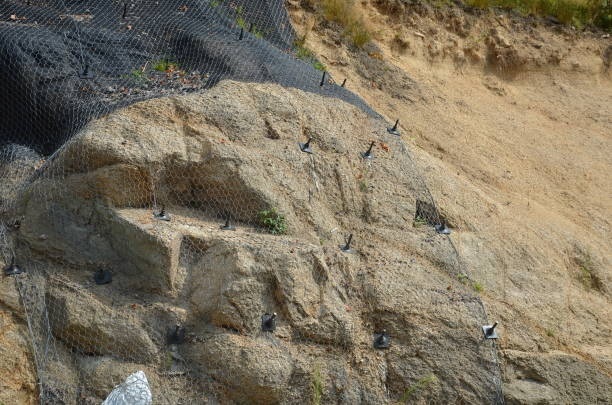
In addition to the rock type itself, the condition of the rock mass is also important. The presence of fractures, bedding planes, geological structures, and other discontinuities can influence how blasting energy interacts with the rock mass.
Understanding these conditions helps technical teams develop a blasting plan that is better suited to actual field conditions.
3. Blast Area Design
The geometry of the work area can also affect blasting results. The configuration and dimensions of the area to be excavated need to be considered during the planning stage.
The objective is to achieve the required rock breakage while maintaining the working area within the planned operational and safety conditions.
4. Blasthole Conditions and Quality
Blastholes are a critical component of the blasting system. Hole conditions, drilling quality, and compliance with the planned design can all influence the final results.
For this reason, drilling and blasting should not be viewed as two completely separate activities. The quality and accuracy of drilling can have a direct impact on the effectiveness of the subsequent blasting operation.
5. Selection of Blasting Equipment
In addition to explosives, various supporting accessories are used in drill and blast operations. Equipment selection needs to be matched to the blasting design and specific working conditions.
Equipment such as blasthole liners, collar protection, and various in-hole accessories each serve specific purposes in supporting blasting operations and maintaining appropriate blasthole conditions.
6. Operational Conditions in the Field
Environmental and operational factors also need to be taken into consideration. Weather conditions, access to the work area, ground conditions, and coordination between different teams can all affect the execution of blasting activities.
For this reason, blasting operations require effective coordination between drilling, blasting, geology, mine operations, and other relevant teams.
Why Is Fragmentation an Important Factor?
One of the main objectives of blasting is to achieve rock fragmentation that is suitable for subsequent processes.
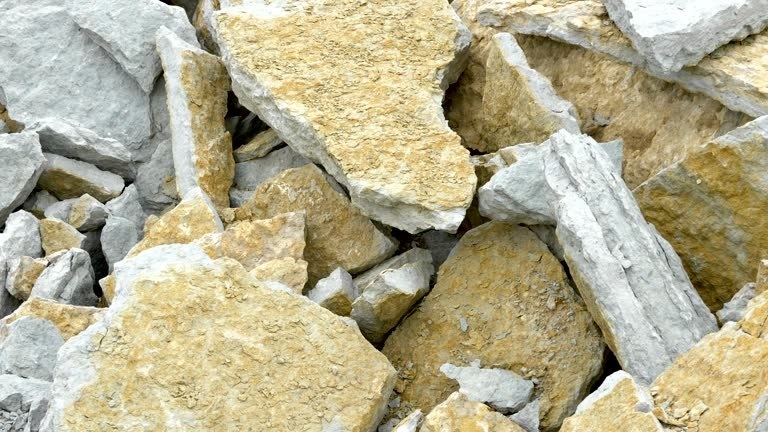
Oversized rock fragments can make loading and handling more difficult and may require additional processing. Conversely, fragmentation that does not match the requirements of the work area can also create operational challenges.
Therefore, blasting results should be viewed as part of the broader mining process. The success of a blasting operation is not determined solely by whether the rock has been successfully broken, but also by how effectively the resulting material supports downstream activities.
Conclusion
Mining blasting is an important part of rock excavation in mining operations. Its application can vary between open-pit and underground mining because each site has different geological characteristics and operational requirements.
Blasting results are also not determined by a single factor. Rock characteristics, rock mass conditions, blast area design, drilling quality, blasting equipment, and operational conditions can all interact and influence the overall outcome.
Therefore, successful drill and blast operations require an approach tailored to actual site conditions, supported by appropriate equipment and technical planning. For companies looking for solutions and equipment to support drill & blast operations, Prima Minechem Indonesia provides a range of mining products from MTi Group. Further information about the available products and solutions can be found through Prima Minechem’s product and service pages.