What Is Rock Fragmentation and Why Is It Important in Blasting?
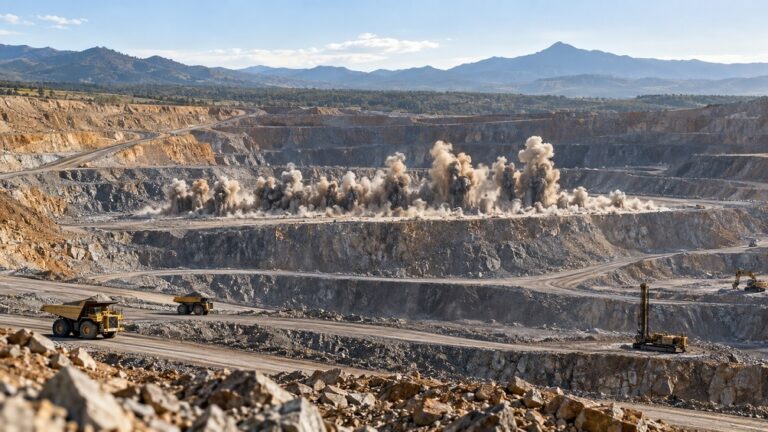
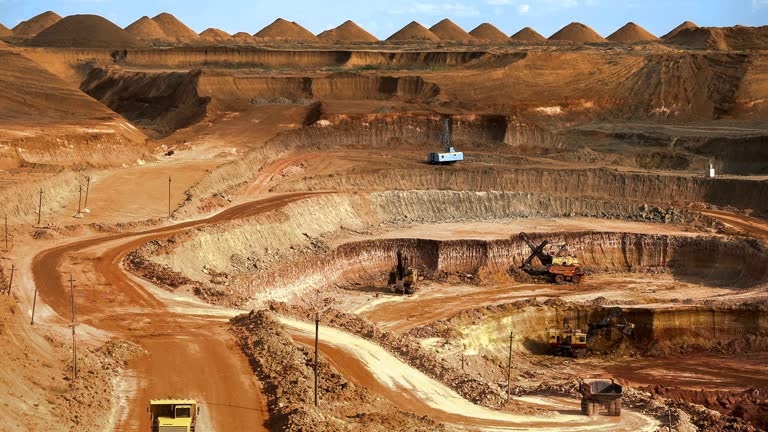
In mining operations, blasting is not solely intended to break rock. The final results of the blasting process also need to be considered because they can affect subsequent activities, including loading, hauling, and material processing. One of the key aspects used to evaluate these results is rock fragmentation.
Rock fragmentation describes the size and distribution of rock material after blasting. Proper fragmentation can help mining operations run more efficiently. On the other hand, unsuitable fragmentation may require additional handling and can affect overall mining productivity.
Therefore, understanding fragmentation is an important part of planning and evaluating drill and blast operations.
What Is Rock Fragmentation?
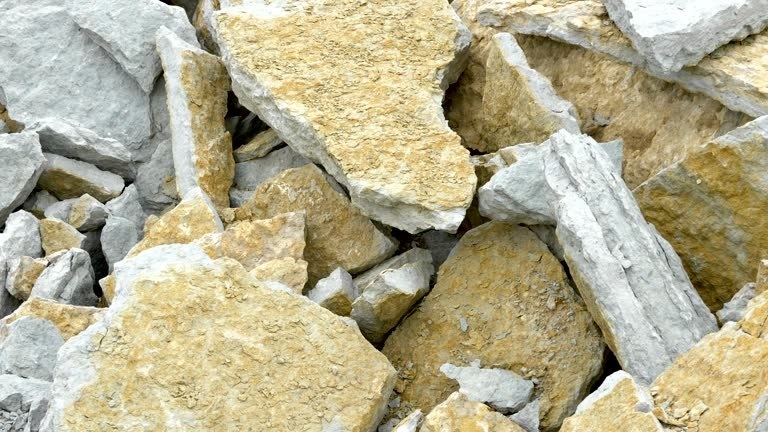
Rock fragmentation refers to the condition and size distribution of rock fragments produced after blasting. When blasting energy acts on a rock mass, the rock is subjected to stress and subsequently breaks into multiple fragments of different sizes.
The resulting fragments are not always uniform in size. A single blast area may contain everything from relatively small fragments to larger rock blocks.
In mining operations, this size distribution is important because blasted material will proceed to subsequent stages of the operation. Therefore, fragmentation is not simply about how much rock has been broken, but also whether the resulting material size meets operational requirements.
Why Is Fragmentation Important in Blasting?
Fragmentation is an important performance indicator because blasting results are directly connected to activities that take place after the blast.
When fragmentation is appropriate, the material can be handled more efficiently by loading and hauling equipment. The resulting material may also be better suited to the requirements of subsequent processing operations.
Conversely, an excessive amount of large rock blocks may require additional handling before the material can be processed. This condition can increase operational time and costs.
Therefore, an effective blasting design should not only consider the ability to break the rock mass but also the size and distribution of the resulting fragmentation.
The Relationship Between Fragmentation and Mining Processes
Fragmentation results can affect several stages of the mining operation.
Loading
Properly fragmented material can support more efficient loading using equipment such as excavators or shovels. Oversized material can make digging and loading more difficult and may require additional handling.
Hauling
Material size can also influence hauling operations. Appropriate fragmentation allows blasted material to be handled and loaded more efficiently.
Processing
In operations involving crushing or rock processing, the size of blasted material is an important consideration. Suitable fragmentation can help reduce the workload placed on subsequent crushing processes.
Therefore, fragmentation should be evaluated in the context of the entire mining process rather than as an isolated blasting result.
Factors Affecting Rock Fragmentation
Fragmentation is influenced by a variety of factors. No single factor automatically determines the final result because rock conditions and blasting designs can vary from one site to another.
1. Rock Mass Characteristics
Rock properties are among the primary factors affecting fragmentation. Rock strength, geological structures, fractures, and planes of weakness can influence how blasting energy interacts with the rock mass.
Rock masses with different characteristics can produce different responses even when similar blasting approaches are applied.
2. Geological Conditions
Geological structures such as fractures, faults, bedding planes, and structural orientations can influence the direction and pattern of rock breakage.
For this reason, geological information is an important component of blasting planning.
3. Drilling Design
Drilling has a close relationship with blasting performance. The position and pattern of blastholes should follow the established design so that energy distribution matches the requirements of the excavation.
Deviations or inconsistencies during drilling can affect blasting results and the resulting fragmentation distribution.
4. Blasthole Conditions
Blasthole conditions also need to be considered. Hole depth, hole condition, and other factors associated with blastholes can influence the implementation of the blasting design.
Therefore, checking blasthole conditions is an important part of preparation before blasting takes place.
5. Selection of Blasting Systems and Equipment
The equipment used in drill and blast operations also plays a role in supporting the implementation of the blasting design.
Various accessories, including blasthole liners, collar protection, and in-hole accessories, are used according to the application requirements and blasting design.
Equipment selection should be adapted to site conditions and the blasting system being implemented.
Oversized and Undersized Fragmentation
One of the challenges in blasting is achieving an appropriate fragmentation distribution.
Excessively large fragments can result in oversized rocks that require additional handling. Such material can interfere with loading and processing operations.
At the same time, excessively fine fragmentation is not necessarily ideal in every situation. The size distribution should be matched to operational requirements because the objective of blasting is to produce material that supports the overall mining process.
Therefore, fragmentation targets should be established based on project requirements and the characteristics of subsequent processes.
How Is Fragmentation Evaluated?
Fragmentation evaluation is conducted to determine whether the blasting results meet the established targets.
One approach is to assess the size distribution of material produced by blasting. Measurements can be carried out using methods and technologies appropriate to the operational requirements.
The evaluation results can then be used to improve the design of subsequent blasting operations.
This approach makes drill and blast an operation that can be continuously evaluated and improved. Data from previous blasts can provide valuable references for understanding the relationship between rock conditions, drilling design, blasting, and fragmentation results.
How Can Appropriate Fragmentation Be Achieved?
Achieving the desired fragmentation requires an integrated approach. Geological conditions should first be properly understood, after which the drilling and blasting designs can be adapted to the characteristics of the working area.
In addition, blasting results should be evaluated to determine whether the size and distribution of the resulting material meet the requirements of subsequent processes.
Through consistent evaluation, operational teams can develop a better understanding of the factors that influence fragmentation results in specific areas.
The Role of Equipment in Drill and Blast Operations
In addition to blasting design and rock conditions, using the right equipment is also an important part of blasting operations. Equipment should be selected based on technical requirements, site conditions, and the blasting system being implemented.
Prima Minechem Indonesia provides a range of solutions for the mining industry through its MTi Group product line, including products for Drill & Blast applications. Available products cover various categories, including bench accessories, blasthole liners, collar protection, and in-hole accessories.
These products can form part of a supporting system for drill and blast operations designed according to the requirements of each mining project.
Conclusion
Rock fragmentation is an important aspect of blasting because the size and distribution of blasted material can affect loading, hauling, and material processing operations.
Fragmentation results are influenced by various factors, ranging from rock characteristics and geological conditions to drilling design, blasthole conditions, and the blasting systems and equipment used.
Good fragmentation does not mean that every rock fragment must be exactly the same size. More importantly, the resulting size distribution should be appropriate for the requirements of the overall mining operation.
Therefore, blasting planning should be carried out through an integrated approach, with results evaluated regularly. To support drill and blast requirements, Prima Minechem Indonesia provides a range of MTi Group products that can be used according to specific mining applications.
By understanding the relationship between rock conditions, blasting design, and fragmentation, mining companies can conduct more targeted evaluations of rock excavation processes and their impact on subsequent mining activities.