What Is GCCM? Understanding Geosynthetic Cementitious Composite Mat for Infrastructure
In infrastructure projects, materials used to protect soil surfaces, channels, slopes, and areas at risk of erosion must be selected based on site conditions and installation methods. One material that has gained recognition for these applications is GCCM.
GCCM stands for Geosynthetic Cementitious Composite Mat, a geosynthetic composite material containing a cementitious mixture that can be used as a protective surface layer.
One product that uses GCCM technology is Concrete Canvas, which can be used in various applications, including slope protection, channel lining, erosion control, and other infrastructure projects.
What Is GCCM?
GCCM, or Geosynthetic Cementitious Composite Mat, is a geosynthetic material containing a cementitious matrix that is designed to form a concrete-like layer when activated with water.
In simple terms, this material can be understood as concrete in the form of a flexible mat or sheet that can be placed over surfaces requiring protection.
Once installed and activated according to the specified procedures, the material undergoes a hardening process, forming a more rigid cementitious layer that can withstand environmental conditions.
This concept provides an alternative for applications that would traditionally require conventional concrete materials.
How Does GCCM Work?
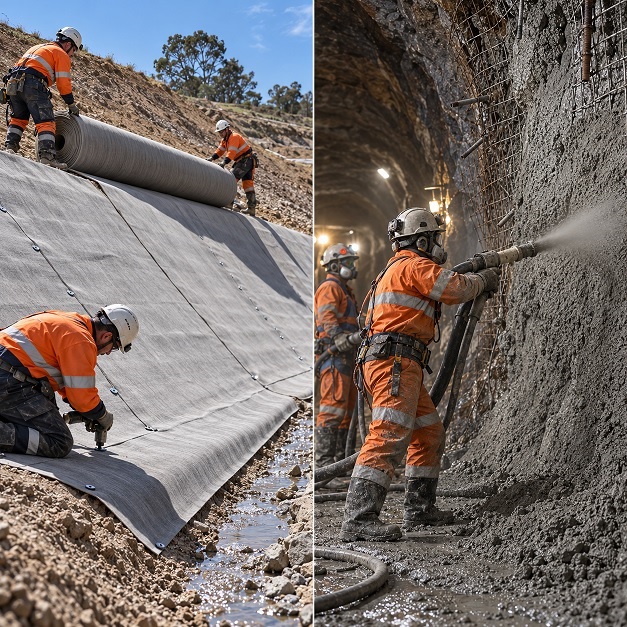
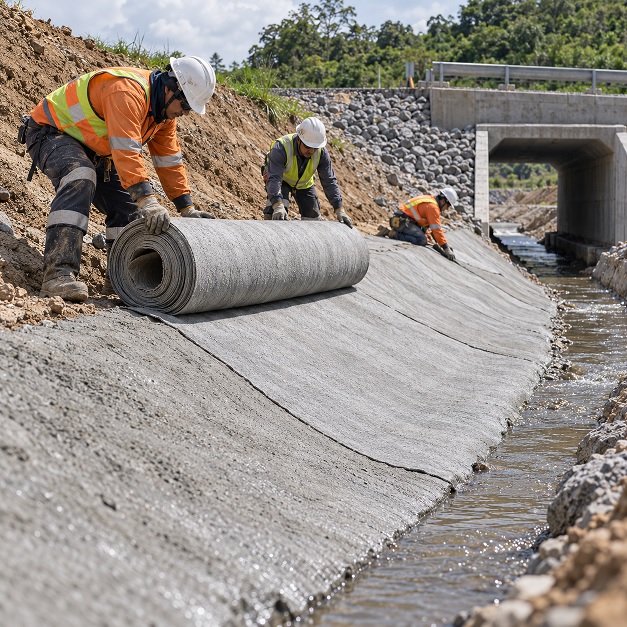
GCCM has a structure that allows the material to be transported and installed in sheets or rolls.
For certain applications, the material is first placed over the area requiring protection. Once positioned correctly, the GCCM is activated using water in accordance with the product’s installation procedures.
The cementitious matrix within the material then undergoes hydration and hardening.
The result is a cementitious layer that conforms to the contours of the underlying surface.
Because of these characteristics, GCCM can be used in areas with surface geometries that may be difficult to accommodate using conventional concrete pouring methods.
What Is GCCM Used For?
GCCM can be used for various surface protection and infrastructure applications.
Common applications include:
- Channel lining
- Slope protection
- Erosion control
- Ground surface protection
- Drainage systems
- Water infrastructure
- Protection of specific areas against erosion
The use of GCCM should always be tailored to site conditions and the specifications of the material being used.
GCCM for Erosion Control
Erosion occurs when soil surfaces are worn away by water, surface runoff, or other environmental factors.
In certain areas, erosion can alter the shape of the ground and reduce the stability of the affected area.
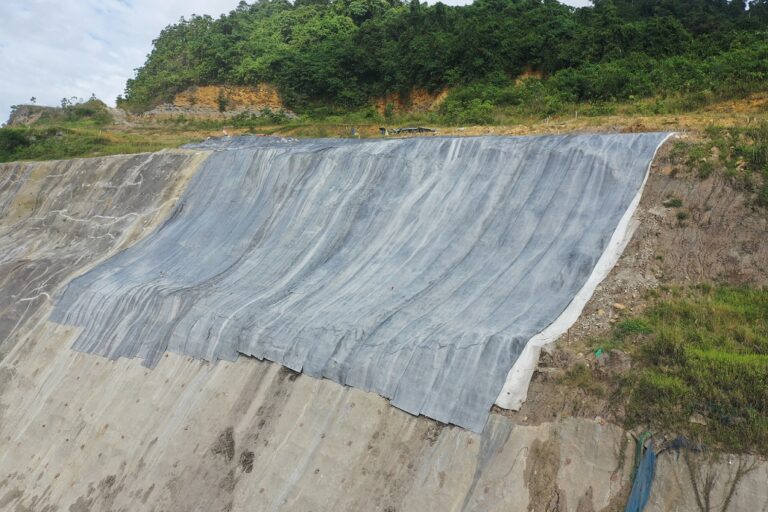
GCCM can be used as a protective layer to help reduce the effects of erosion on designated surfaces.
Applications of this type can be found on slopes, waterways, drainage channels, and infrastructure areas that require surface protection.
GCCM for Channel Lining
One of the notable applications of GCCM is channel lining.
Water channels without surface protection may experience erosion caused by continuous water flow. Over time, this can affect the channel’s shape and functionality.
GCCM can be used as a cementitious lining to protect channel surfaces.
One advantage of this approach is that the material can conform to the shape of the channel and be installed in areas requiring protection without relying entirely on conventional concrete pouring methods throughout the installation process.
GCCM for Slope Protection
Slopes are susceptible to erosion, particularly when exposed to water runoff and varying weather conditions.
Using GCCM on slopes can help create a protective surface layer.
Before installation, the slope conditions must still be assessed. Factors such as slope angle, soil conditions, drainage, and the potential for ground movement should be taken into account.
GCCM functions as a surface protection material, so the overall slope protection system must still be designed to meet the project’s engineering requirements.
What Are the Advantages of GCCM?
One reason GCCM is used in various projects is that its characteristics differ from those of conventional concrete.
1. Easier to Transport to the Site
GCCM is available in mat or roll form, allowing the material to be transported to the project site before installation.
This can be particularly advantageous at locations with limited access for transporting large quantities of conventional concrete materials.
2. Conforms to Surface Contours
Before hardening, GCCM has characteristics that allow it to conform to the shape of the underlying surface.
This can facilitate installation in channels, on slopes, and in other areas with specific geometries.
3. Relatively Practical Installation
GCCM can be installed using a process that differs from conventional concrete pouring. The material is placed over the designated area and then activated with water.
However, installation procedures must still comply with the product specifications and project conditions.
4. Forms a Cementitious Layer
Following hydration and curing, the material forms a cementitious layer that can be used for surface protection.
The final characteristics depend largely on the product type and application conditions.
GCCM vs. Conventional Concrete
GCCM does not necessarily replace conventional concrete in every application.
Both materials have different characteristics and uses.
For projects requiring concrete structures with specific structural designs, conventional concrete may be more suitable. Meanwhile, GCCM can serve as an alternative for surface protection, erosion control, and channel lining under certain conditions.
Therefore, material selection should take the following factors into account:
- Site conditions
- Surface type
- Infrastructure function
- Site accessibility
- Installation methods
- Environmental conditions
- Technical specifications
- Design requirements
What Is Concrete Canvas?
Concrete Canvas is a GCCM product that can be used in various surface protection applications.
It can be applied to projects involving channel lining, erosion control, slope protection, and other infrastructure works.
Prima Minechem provides Concrete Canvas solutions for the Indonesian market as part of its portfolio of geosynthetic products and materials for infrastructure applications.
The appropriate type of Concrete Canvas should be selected based on project conditions. Factors such as the area to be covered, surface geometry, required thickness, and installation method should be considered before choosing a product.
How to Select GCCM for Your Project
Before selecting a GCCM product, several factors need to be assessed.
Surface Conditions
The surface must be prepared according to the installation requirements. Loose material or unsuitable surface conditions may affect the quality of the installation.
Area Coverage
Calculate the total area to be lined or protected to estimate material requirements more accurately.
Water Conditions
For channel lining and drainage applications, water flow characteristics must be taken into account.
Slope Angle
For slope applications, the gradient and surface conditions are important factors in determining the appropriate installation method.
Site Accessibility
Access conditions should also be considered, as the material must be transported to and installed at the project site.
GCCM for Infrastructure Applications
GCCM can be an alternative material for infrastructure projects requiring surface protection using cementitious materials.
Its applications may include channels, drainage systems, slopes, erosion control, and specific areas requiring protection against erosion.
However, GCCM applications must always be based on actual project conditions. Infrastructure projects have different requirements, so product specifications and installation methods must be selected appropriately.
GCCM Solutions from Prima Minechem
Prima Minechem provides Concrete Canvas for infrastructure and industrial projects in Indonesia. This product can be used as a GCCM solution for various applications, including channel lining, erosion control, and slope protection.
With experience serving the mining and infrastructure sectors, Prima Minechem can provide information to help identify material options suited to specific applications.
Before selecting a product, project conditions should be discussed to ensure that the GCCM type and installation method are aligned with actual site requirements.
Conclusion
GCCM, or Geosynthetic Cementitious Composite Mat, is a geosynthetic material containing a cementitious component that is designed to form a concrete-like layer after activation and hardening.
This material can be used for various applications, including channel lining, erosion control, slope protection, drainage, and selected infrastructure projects.
Compared with conventional concrete methods, GCCM offers a different installation approach because the material is supplied in mat or roll form and can conform to surface contours before hardening.
For projects in Indonesia, Prima Minechem provides Concrete Canvas as a GCCM solution that can be considered for various surface protection and infrastructure applications.
Product selection should take into account site conditions, area coverage, surface geometry, water flow, slope angle, accessibility, and the project’s technical requirements to ensure that the selected solution meets actual project needs.