Advancements in construction material technology have provided contractors with more efficient solutions for completing projects safely, quickly, and cost-effectively. One material that has gained increasing attention in civil engineering, mining, irrigation, and infrastructure projects is the cementitious geocomposite.
This material combines the flexibility of geosynthetics with the strength of cement-based technology. Cementitious geocomposites are delivered to project sites in roll form, laid directly onto the prepared surface, and then hydrated with water to form a thin, durable concrete layer.
These characteristics make cementitious geocomposites an attractive alternative for applications that traditionally require cast-in-place concrete, shotcrete, or precast concrete systems. However, their use should always be evaluated based on site conditions, structural requirements, loading conditions, hydraulic performance, and project specifications.
What Is a Cementitious Geocomposite?
A cementitious geocomposite refers to a Geosynthetic Cementitious Composite Mat (GCCM)—a factory-manufactured composite material consisting of a dry cementitious mixture encapsulated within geosynthetic layers.
Unlike conventional concrete, which must be mixed, transported, poured, and finished on-site, GCCMs are manufactured under controlled factory conditions with consistent thickness and composition. Before hydration, the material remains flexible, allowing it to be rolled, transported, cut, and installed to conform to complex surface profiles.
Once hydrated, the cementitious mixture hardens to form a durable composite layer that combines the tensile properties of geosynthetics with the compressive strength of cement-based materials. Because the material transitions from a flexible state to a rigid structure after hydration, its performance should be evaluated both before and after curing.
Main Components of Cementitious Geocomposites
Although product configurations vary by manufacturer, most cementitious geocomposites consist of the following key components.
Dry Cementitious Mixture
The dry cementitious mixture reacts with water during hydration to produce a hardened protective layer with the required mechanical strength.
Fiber Matrix
The fiber matrix retains the cementitious mixture within the composite structure while maintaining material integrity during transportation, installation, shaping, and curing.
Geotextile Layers
Geotextile layers encapsulate and reinforce the material. Before hydration, they provide the flexibility needed for installation. After curing, they contribute to the composite’s tensile and flexural performance.
Backing Layer
Some products incorporate a backing layer made from PVC, LLDPE, or other geomembrane materials. This layer helps control seepage and separates the cementitious layer from the underlying ground.
For example, Concrete Canvas CCX™ consists of two interconnected geotextile layers filled with a specially formulated cementitious material. Certain variants also include an LLDPE geomembrane backing designed to reduce or prevent seepage.
How Do Cementitious Geocomposites Work?
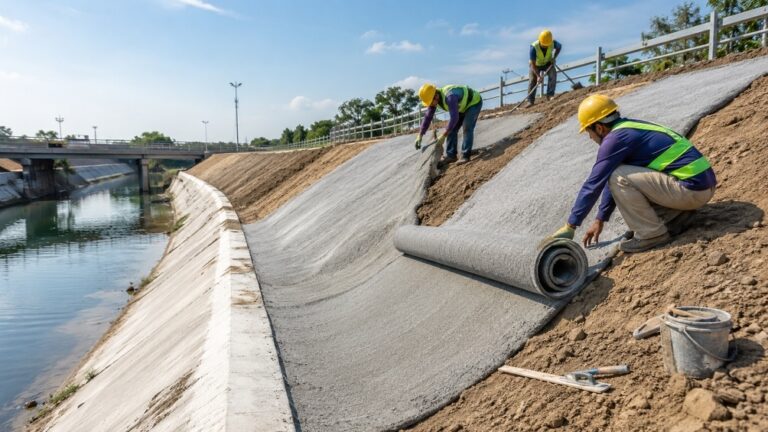
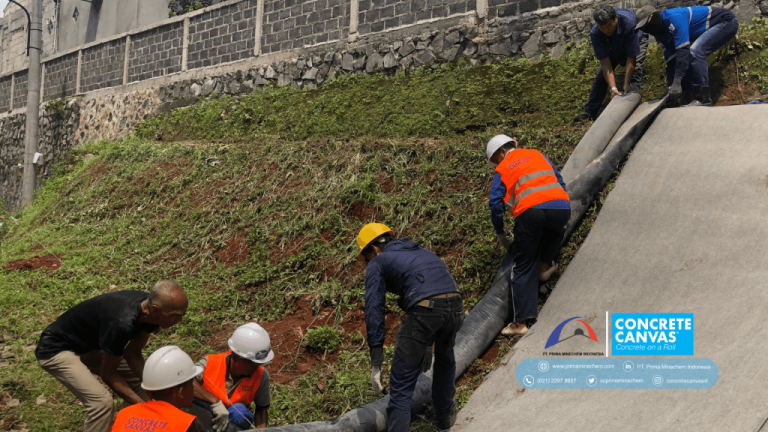
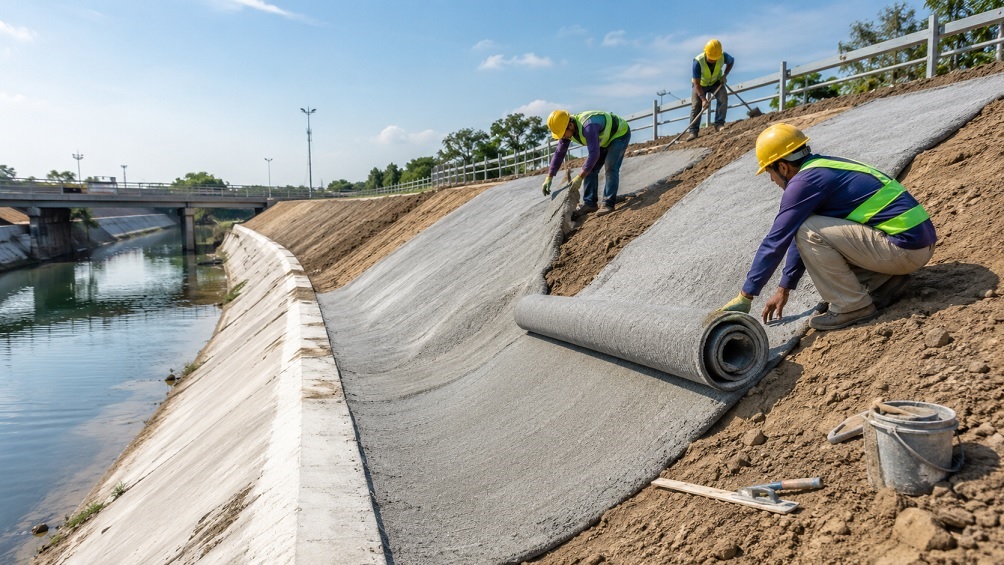
The installation process differs significantly from conventional concrete construction. The material is delivered in rolls, cut to the required dimensions, and laid over the prepared surface.
A typical installation process includes:
- Preparing and cleaning the installation surface.
- Unrolling the material to match the project geometry.
- Cutting and joining adjacent sheets according to the design.
- Securing the material using anchors, pins, screws, or other fastening systems.
- Sealing and securing edges and joints.
- Hydrating the material uniformly with water.
- Allowing the material to cure for the specified period.
With Concrete Canvas, the material is positioned and secured before hydration. According to the manufacturer, installers have approximately two hours of working time before initial setting begins, and the material typically reaches its service performance within approximately 24 hours.
Although the installation process appears straightforward, successful performance depends on proper surface preparation, installation orientation, joint detailing, anchoring methods, water application, edge termination, and protection against sub-surface water flow.
ASTM D8173 provides guidance on GCCM site preparation, installation, layout, and hydration. However, the standard also emphasizes that these general guidelines should not replace project-specific installation specifications.
Benefits of Cementitious Geocomposites for Contractors
Cementitious geocomposites offer several advantages, particularly for projects with limited access, tight schedules, labor constraints, or logistical challenges.
Simplified Installation
Supplied in roll form, the material can be installed directly onto prepared surfaces without requiring large-scale on-site concrete mixing.
Conforms to Complex Surface Profiles
Before hydration, the material remains flexible enough to follow the contours of channels, slopes, existing structures, and irregular surfaces, making it particularly suitable for rehabilitation and lining applications.
Faster Project Execution
By eliminating many of the processes associated with conventional concrete—including mixing, pouring, finishing, and formwork removal—construction time can often be reduced. Concrete Canvas states that its products can be installed significantly faster than traditional concrete methods, although actual installation rates depend on project conditions, surface preparation, workforce, and installation techniques.
Reduced Material Logistics
Since the cementitious material is already incorporated into the composite, contractors no longer need to transport separate quantities of cement, sand, aggregates, and mixing water comparable to conventional concrete operations.
Consistent Thickness
GCCMs are manufactured under controlled conditions with predefined dimensions and thicknesses, resulting in a more uniform lining and minimizing thickness variations commonly associated with manual concrete placement.
Applications of Cementitious Geocomposites
Cementitious geocomposites are primarily used for erosion protection, hydraulic lining, surface rehabilitation, and infrastructure protection. Common applications include:
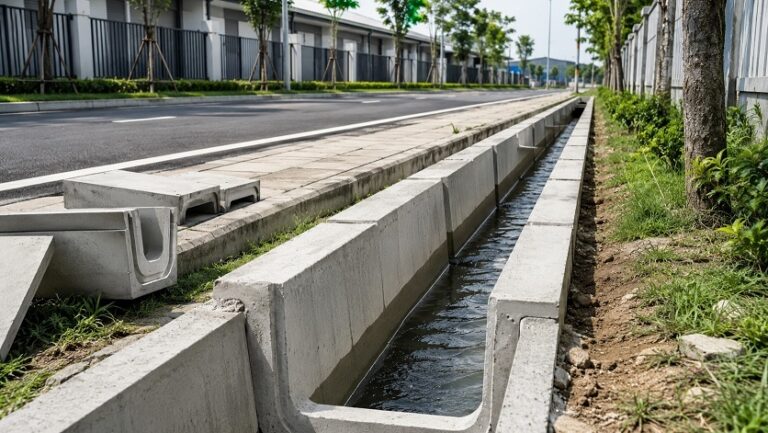
Canal and Drainage Channel Lining
Flowing water can erode soil and damage channel beds and sidewalls. GCCMs create a durable protective lining that helps resist erosion.
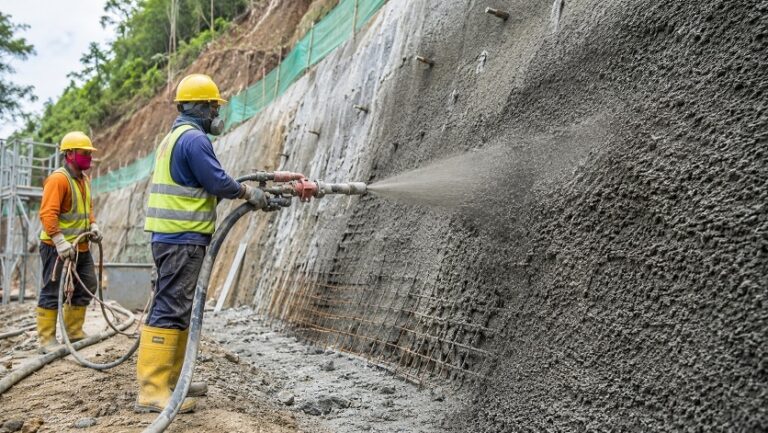
Slope Protection
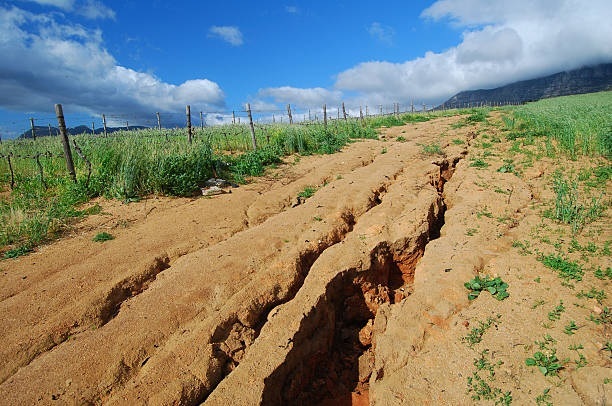
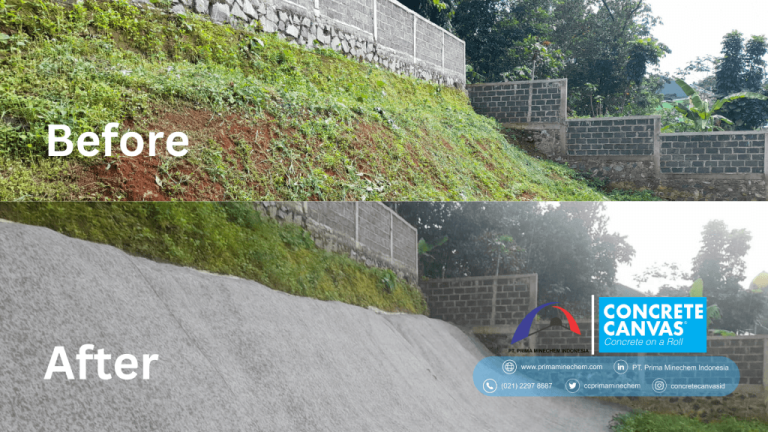
Rainfall and surface runoff can gradually erode slopes by removing soil particles. Cementitious geocomposites provide a stable protective surface in areas requiring long-term erosion resistance.
Culvert Rehabilitation
Older culverts often suffer from abrasion, corrosion, or invert deterioration. In suitable applications, GCCMs can be installed as a rehabilitation lining without requiring complete structural replacement.
Inlet, Outlet, and Spillway Protection
Hydraulic structures frequently experience high flow velocities and localized scour. Properly designed GCCM systems can provide effective surface protection when appropriate material selection, anchoring, and joint detailing are incorporated.
Existing Concrete Rehabilitation
Damaged concrete surfaces may be rehabilitated using GCCMs where technically appropriate. Loose, unstable, cracked, or deteriorated concrete should be repaired before installation to ensure adequate bonding and performance.
Vegetation Control
Once cured, the hardened surface can help suppress vegetation growth around infrastructure, utility corridors, fence lines, and other areas where routine maintenance is difficult.
Can Cementitious Geocomposites Replace Conventional Concrete?
Cementitious geocomposites can serve as an alternative to conventional concrete in certain applications, but they are not intended to replace all structural concrete elements.
They are generally designed as protective lining systems rather than primary structural components. GCCMs are not substitutes for foundations, columns, beams, structural slabs, retaining walls, or other reinforced concrete elements subjected to significant structural loads.
Material selection should consider factors such as:
- Intended function of the lining
- Subgrade conditions
- Flow velocity and discharge
- Abrasion and scour resistance
- Impact loading
- Surface slope
- Seepage control requirements
- Joint and termination details
- Site accessibility and installation methods
- Project specifications and design service life
ASTM D8364 classifies GCCMs according to their intended applications and performance characteristics. Therefore, contractors should avoid selecting products solely based on the term “cementitious geocomposite” and instead evaluate product type, technical data, testing standards, and suitability for specific project conditions.
Improving Construction Efficiency with Cementitious Geocomposites
Cementitious geocomposites offer an innovative approach to infrastructure lining, erosion control, and surface protection. By combining the installation advantages of geosynthetics with the durability of cement-based materials, they provide an efficient solution for a wide range of construction applications.
For contractors, these materials can help accelerate project delivery, simplify logistics, and reduce the need for on-site concrete mixing. Typical applications include drainage channels, irrigation canals, slopes, culverts, spillways, and concrete rehabilitation.
Concrete Canvas is one of the leading GCCM solutions available for these applications. PT Prima Minechem Indonesia supplies Concrete Canvas products and provides technical support to help clients select the most suitable solution for their specific project requirements.
Before selecting any material, project stakeholders should carefully evaluate site conditions, intended functionality, work scope, hydraulic performance, seepage control requirements, and installation methods. Early technical assessment is essential to ensure that the selected cementitious geocomposite delivers optimal long-term performance.