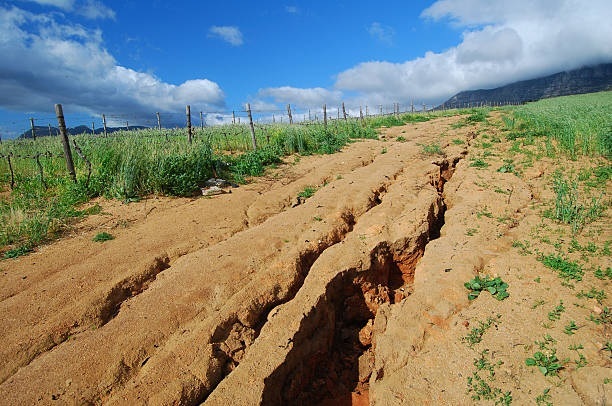
Erosion is the process of wearing away and transporting soil or surface materials caused by water, wind, or human activities. While erosion is a natural phenomenon, construction activities, land clearing, changes in water flow, and the loss of vegetation can significantly accelerate the rate of soil erosion.
In everyday life, erosion may appear as only minor changes to the ground surface. However, on construction sites, mining areas, roads, drainage channels, and industrial facilities, uncontrolled erosion can develop into a serious problem. Soil surfaces may lose their stability, drainage systems can become silted up, slopes may deteriorate, and nearby infrastructure may be at risk of damage.
For this reason, erosion control should be considered from the earliest stages of project planning. Implementing preventive measures early is generally more effective and cost-efficient than repairing extensive damage after it has occurred.
What Is Erosion?
Erosion is the process by which soil particles or surface materials become detached and are transported to another location. Rainfall is one of the most common causes of erosion, particularly when exposed soil lacks adequate protection.
Raindrops striking the ground dislodge fine soil particles. As rainfall increases, surface runoff carries these particles downhill. Over time, this process can create small channels, gullies, and even deeper forms of erosion.
In addition to rainfall, erosion can also occur in canals, drainage systems, rivers, and water discharge areas. The higher the flow velocity, the greater its ability to remove and transport material from the bed and sides of a channel.
Causes of Erosion on Project Sites
Both natural conditions and human activities can influence the severity of erosion. One of the primary causes is heavy rainfall, which generates significant surface runoff. Without a properly designed drainage system, runoff can erode the soil surrounding buildings, roads, and slopes.
Land slope is another important factor. Water flows more rapidly over steep terrain, increasing its capacity to detach and transport soil particles.
Land clearing is also a common contributor to erosion on construction projects. Removing vegetation eliminates the natural protection provided by plant roots and canopy cover, leaving the soil more vulnerable to rainfall and surface runoff.
Uneven soil compaction, changes in land contours, uncontrolled water discharge, and drainage systems with insufficient capacity can further increase the risk of erosion.
Types of Erosion You Should Know
Erosion does not always begin as major visible damage. In its early stages, it may occur as a thin and uniform loss of topsoil across the ground surface. This process is commonly referred to as sheet erosion because it gradually removes a thin layer of soil and can be difficult to detect.
As surface runoff becomes more concentrated, small channels may begin to form. If left untreated, these channels can develop into deeper gullies that are far more difficult to repair.
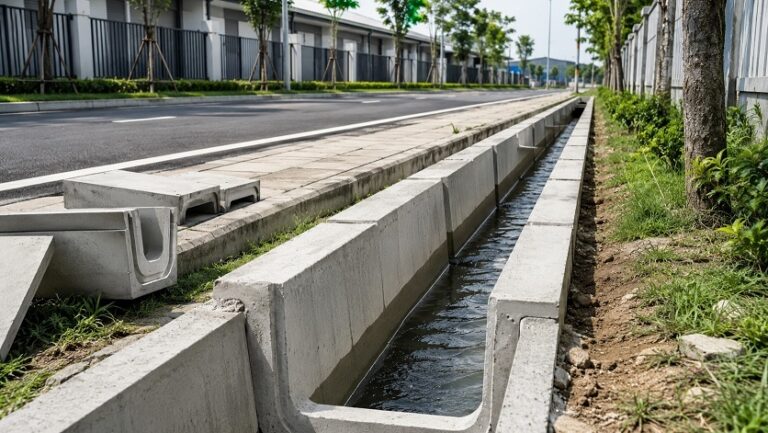
In drainage channels, erosion may occur along the channel bed, sidewalls, bends, inlets, and outlets. Changes in flow direction or water velocity can create concentrated scouring at specific locations.
Erosion may also affect embankments and slopes due to rainfall, surface runoff, and soil conditions. It is important to distinguish surface erosion from geotechnical instability or mass soil movement. Erosion protection measures alone do not eliminate the risk of landslides if the slope itself is structurally unstable.
How to Prevent Erosion
There is no single erosion control method that is suitable for every site. The most appropriate solution depends on factors such as slope gradient, soil characteristics, rainfall intensity, flow velocity, land use, and the intended function of the area.
Vegetation can be an effective solution where plant growth is feasible. Plant roots help bind the soil together, while the vegetation canopy reduces the direct impact of rainfall on the ground surface.
Terracing or reshaping the land contours can slow surface runoff on sloped terrain. Drainage systems should also be designed to collect and safely convey water to appropriate discharge points.
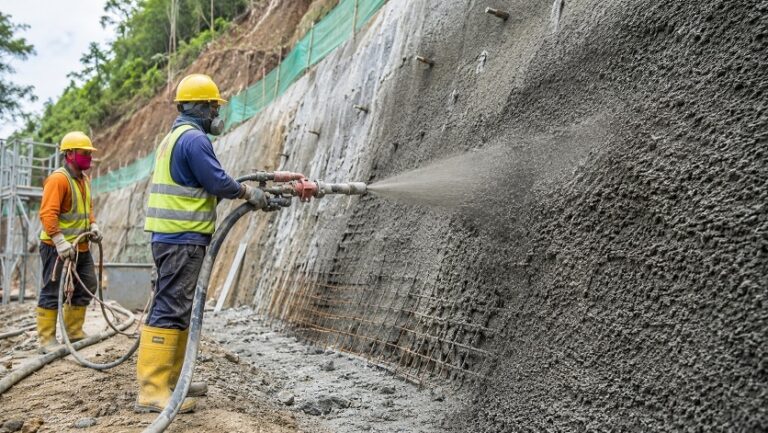
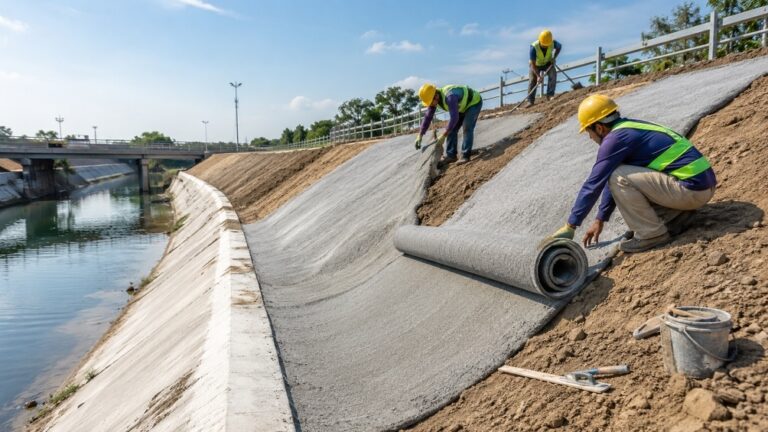
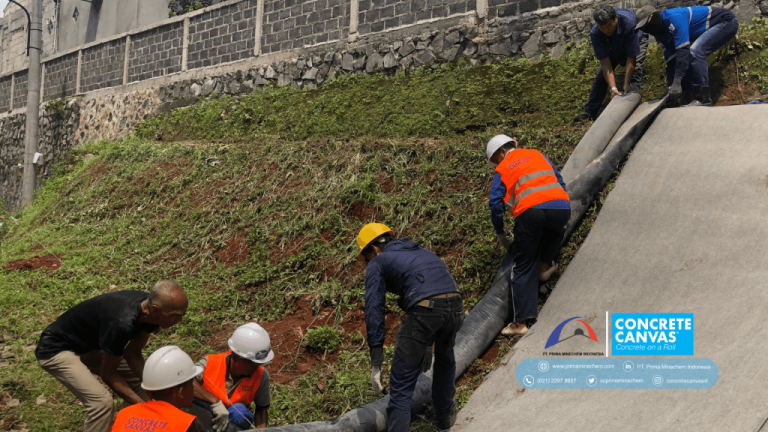
For areas exposed to stronger water flows, erosion protection may include rock armoring, concrete lining, geotextiles, shotcrete, or cementitious geocomposite materials. The selection of materials should take into account abrasion resistance, surface geometry, site accessibility, and the required service life.
Erosion Control Solutions from Prima Minechem
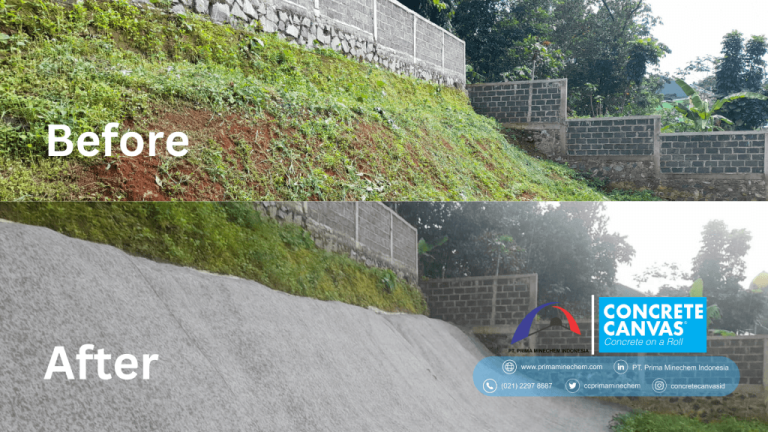
PT Prima Minechem Indonesia provides Concrete Canvas solutions for construction, mining, public infrastructure, drainage channels, and slope protection projects. As the exclusive distributor of Concrete Canvas in Indonesia, Prima Minechem supplies cementitious geocomposite materials designed to help address erosion challenges across a wide range of project conditions.
Prima Minechem also has experience with Concrete Canvas applications for irrigation projects and slope protection works throughout Indonesia. Every project requires an assessment of site conditions, including surface characteristics, project area, flow conditions, abrasion levels, and the appropriate anchoring method.
By understanding the causes and impacts of erosion from the outset, project owners and contractors can select more effective erosion protection systems. Contact the Prima Minechem team to discuss your erosion control requirements and determine whether Concrete Canvas is the right solution for your specific project conditions and objectives.