Concrete Canvas: A Proven Alternative to Cement Blankets for Infrastructure Projects
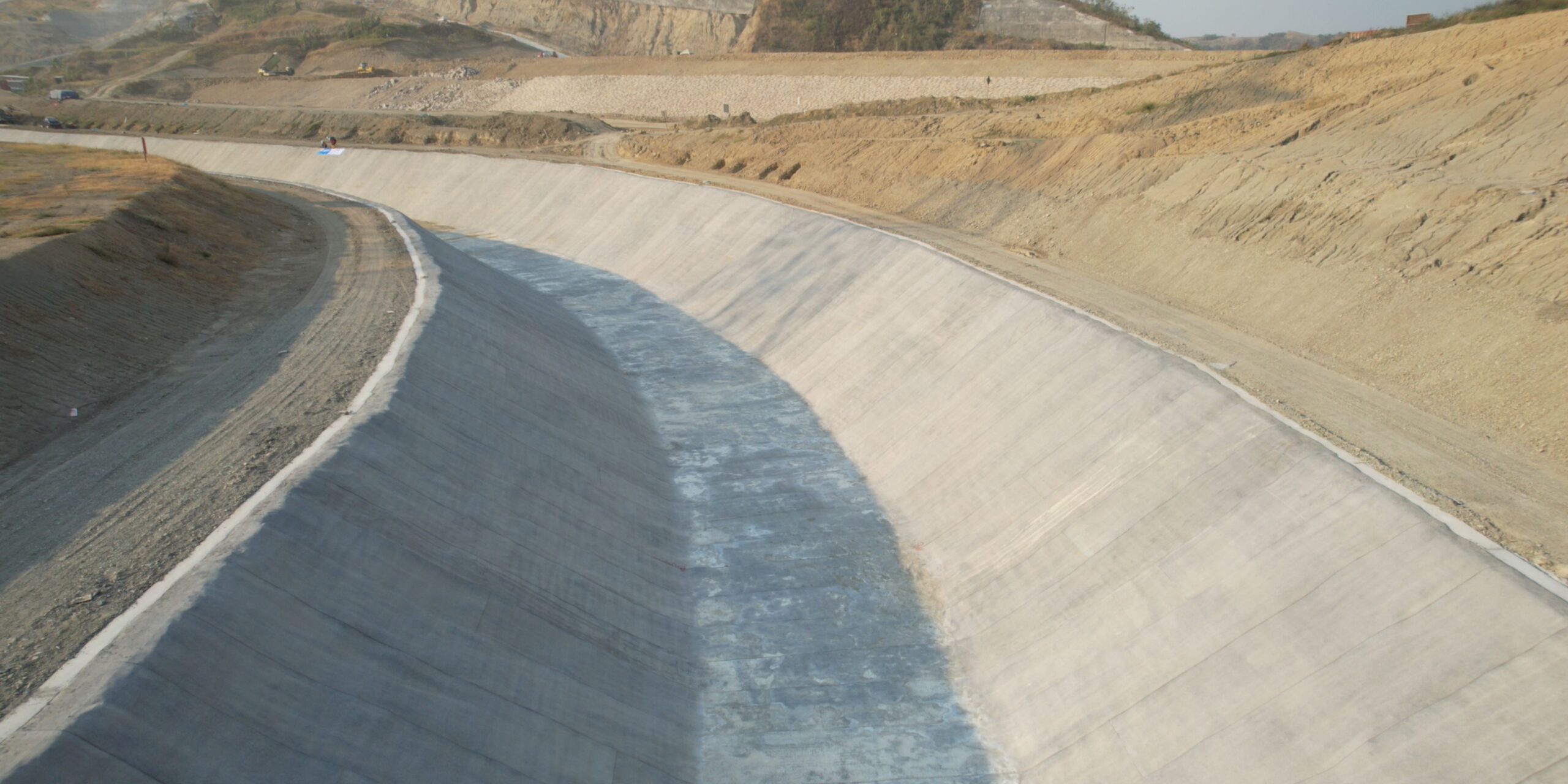
Advances in construction technology have led to the development of innovative materials that help accelerate project execution without compromising quality, durability, or long-term performance. One material that has gained increasing attention for channel lining, slope protection, erosion control, and infrastructure rehabilitation is the cement blanket.
The term cement blanket is commonly used in the market to describe flexible sheet materials containing a dry cementitious mixture. These materials are supplied in roll form, unrolled to conform to the surface profile, and then hydrated with water to form a hardened concrete layer.
However, contractors should not select a product based solely on the term cement blanket. Product performance can vary significantly in terms of composition, mechanical strength, abrasion resistance, manufacturing quality, testing methods, and suitability for specific site conditions.
One product in this category that is supported by internationally recognized technical standards and extensive application references is Concrete Canvas®. It is a Geosynthetic Cementitious Composite Mat (GCCM) specifically engineered as a surface protection and lining solution for a wide range of infrastructure projects.
What Is the Relationship Between Cement Blankets and Concrete Canvas?
Cement blanket is a generic market term commonly used to describe cement-based lining materials supplied in sheet or roll form. Today, the term is frequently associated with products that imitate the concept originally developed by Concrete Canvas®.
Concrete Canvas® is the original and pioneering brand in the Geosynthetic Cementitious Composite Mat (GCCM) category. This technology combines geosynthetic materials with a specially formulated dry cementitious mixture, allowing the material to remain flexible during installation before hardening into a thin concrete layer after hydration. Since its introduction, many similar products have entered the market and are often referred to as “cement blankets.”
The key difference extends beyond branding—it lies in verified quality and technical assurance.
- Concrete Canvas® is the only GCCM brand in the world certified to comply with ASTM D8364, the international specification developed specifically for GCCM materials.
- Concrete Canvas® is supported by an extensive global installation record, comprehensive technical documentation, and official technical support—advantages that are generally not available with imitation products.
Therefore, if you are searching for a cement blanket solution for infrastructure, mining, or irrigation projects, it is essential to ensure that the selected product has been independently tested and validated against internationally recognized standards. Concrete Canvas® is a proven and certified solution rather than simply another product following the same concept.
Why Is Concrete Canvas Considered a Proven Solution?
GCCMs possess characteristics that differ significantly from conventional geotextiles and traditional concrete. The material transitions from a flexible sheet into a rigid cementitious composite after hydration. Consequently, testing must evaluate both its pre-hydration properties and its performance after curing.
ASTM D8364 is the international specification specifically developed for GCCMs. The standard classifies GCCMs into Type I, Type II, and Type III according to their intended applications and performance requirements.
Testing of GCCMs also includes important performance characteristics such as cementitious compressive strength, flexural strength, specimen preparation procedures, and post-hydration durability. Concrete Canvas provides technical data sheets and product specifications developed in accordance with these GCCM standards.
Concrete Canvas products also undergo quality testing, including ASTM D8058 three-point flexural testing, to evaluate their ability to withstand bending loads after curing.
How Does Concrete Canvas Work?
Installation begins with proper surface preparation. Soil, existing concrete, or other substrates should be stable and reasonably even. Sharp objects, loose materials, and large voids should be removed or repaired to provide adequate support for the lining.
Once the surface has been prepared, the material is unrolled to follow the contour of the area. The sheets are then cut, joined, and secured using anchors, pins, screws, or other fastening systems specified in the project design.
Edges and joints should be properly detailed to prevent water ingress and subsurface flow beneath the lining. The final step is hydration using water spray or another approved hydration method.
Advantages of Concrete Canvas as a Cement Blanket Solution
Concrete Canvas offers several characteristics that can improve construction efficiency.
No On-Site Concrete Mixing Required
The cementitious material is already incorporated within the composite structure. Contractors do not need to transport or mix cement, sand, aggregates, and water as required for conventional concrete works.
Flexible Before Hydration
Before hydration, Concrete Canvas conforms to the shape of channels, slopes, culverts, embankments, and irregular surfaces. This flexibility makes it particularly suitable for complex geometries and locations with restricted access.
Faster Installation
The material is simply unrolled, secured, and hydrated without requiring conventional concrete placement procedures. Depending on project size and complexity, this can help reduce construction time and labor requirements.
Consistent Thickness
Concrete Canvas is manufactured under factory-controlled conditions with predetermined thickness and material composition. This helps minimize thickness variations that may occur with manually placed concrete or shotcrete.
Effective Surface Erosion Protection
Once cured, Concrete Canvas forms a durable protective layer that helps resist erosion caused by rainfall, wind, and surface runoff. However, it is designed for surface erosion protection and should not be considered a primary solution for slopes that are geotechnically unstable.
Concrete Canvas Solutions for Various Project Conditions
Concrete Canvas is available in several product variants to accommodate different project requirements.
The Concrete Canvas® GCCM product range includes CC5™, CC8™, and CC13™, each designed to meet different GCCM classifications and varying surface protection requirements depending on loading conditions and substrate characteristics.
For canal and channel lining applications requiring seepage control, Concrete Canvas CCX™ is available. This product consists of two interconnected geotextile layers filled with a specially formulated concrete mixture.
The CCX-M™ variant incorporates an LLDPE geomembrane backing, which helps reduce or prevent seepage. According to Prima Minechem, the CCX concrete layer provides more than 3.5 times the abrasion resistance of standard OPC concrete and complies with ASTM D8364 Type II GCCM requirements.
The appropriate product variant should always be selected based on factors such as flow velocity, abrasion conditions, slope gradient, foundation characteristics, seepage control requirements, and the intended function of the lining.
Infrastructure Applications of Concrete Canvas
Concrete Canvas can be used in a wide range of surface protection and lining applications, including:
Channel and Canal Lining
The material can be installed to line irrigation canals, drainage channels, ditches, and other water conveyance systems. The hardened lining helps protect both the channel bed and sidewalls against erosion.
Slope Protection
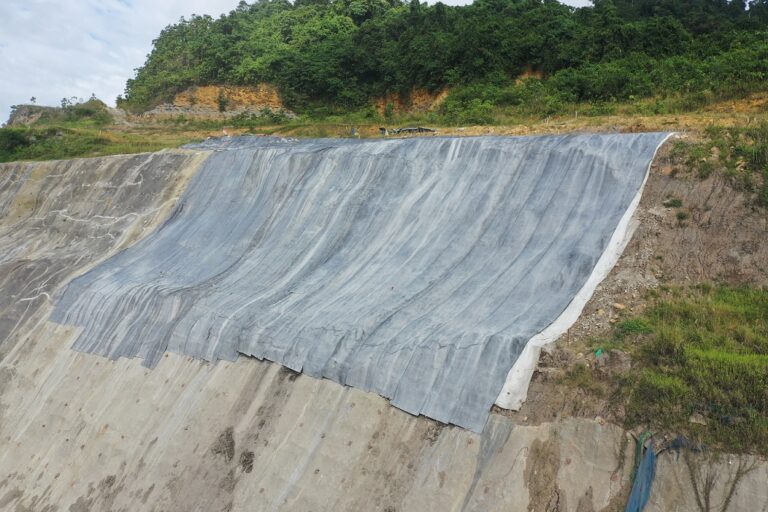
Concrete Canvas can be installed on slopes that have already been confirmed to be geotechnically stable, providing long-term protection against erosion caused by rainfall and surface runoff.
Culvert Lining
Under suitable conditions, the material can be used to rehabilitate or protect culvert surfaces without requiring complete replacement of the existing structure.
Concrete Rehabilitation
Concrete Canvas may be used as an additional protective lining to help extend the service life of concrete infrastructure affected by surface deterioration.
Vegetation Control
The hardened concrete layer helps suppress vegetation growth around utility corridors, fence lines, drainage systems, and other infrastructure areas where maintenance access is limited.
Globally, Concrete Canvas GCCM has been successfully applied in canal lining, drainage ditches, slope protection, embankments, culvert rehabilitation, concrete remediation, geomembrane protection, and vegetation control projects.
Concrete Canvas Solutions from Prima Minechem Indonesia
PT Prima Minechem Indonesia is the exclusive distributor of Concrete Canvas in Indonesia. Since 2012, Prima Minechem has supported mining and construction projects by providing specialized equipment, construction materials, surface protection systems, and technical support.
For contractors, consultants, and project owners seeking a reliable cement blanket solution, Concrete Canvas offers a compelling option backed by multiple product variants, internationally recognized GCCM testing standards, comprehensive installation guidelines, and proven project references.
Consult the Prima Minechem Indonesia team regarding your project conditions, including surface characteristics, application type, project area, hydraulic conditions, seepage control requirements, and site accessibility. A thorough technical evaluation will help determine the most appropriate Concrete Canvas product and installation method for your project’s specific requirements.