Irrigation is a crucial factor in increasing agricultural productivity. It provides the water plants need for growth and development, resulting in healthy, high-quality, and productive crops. However, Indonesia’s irrigation network still requires significant modernization to ensure its effectiveness..

Irrigation is an effort to supply water to agricultural land using water from sources such as rivers, lakes, or groundwater. Irrigation aims to increase agricultural productivity, reduce the risk of drought, and improve the quality of agricultural products.
Many irrigation networks in Indonesia still need to be modernized. The problems faced by irrigation networks in Indonesia include:
Damage to irrigation networks. Many irrigation networks in Indonesia are damaged due to natural factors, such as floods, erosion, and sedimentation. In addition, many irrigation networks are also damaged due to human factors, such as inadequate maintenance and management.
Low water-use efficiency. This is caused by various factors, such as channel leakage, water loss due to evaporation, and inefficient water use by farmers.
Ineffective irrigation network management. This problem is caused by various factors, such as a lack of coordination among related parties, weak irrigation management institutions, and limited awareness among farmers regarding the importance of irrigation management.
Types of Irrigation Channel Lining Materials
There are various materials that can be used to line irrigation channels, including:
Plastering
Plastering is the most commonly used material for lining irrigation channels. Plastering is made from a mixture of cement, sand, and water. Plastering has the advantage of being easy to apply and relatively affordable. However, plastering also has the disadvantage of being prone to cracking and leakage.
Concrete
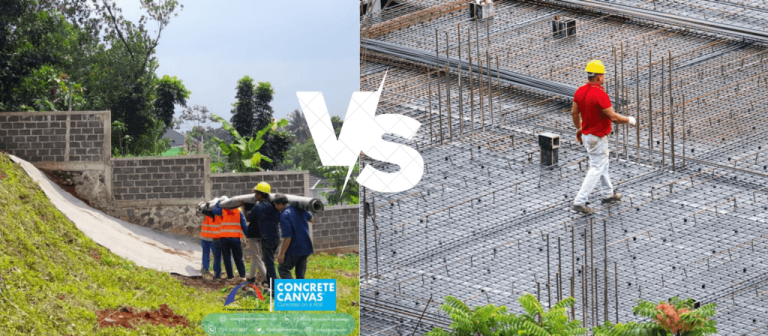
Concrete is a strong and durable material for lining irrigation channels. Concrete is made from a mixture of cement, sand, gravel, and water. Concrete has the advantages of being strong, durable, and resistant to cracking. However, concrete also has the disadvantage of being relatively expensive and requiring a longer installation time.
Concrete Canvas
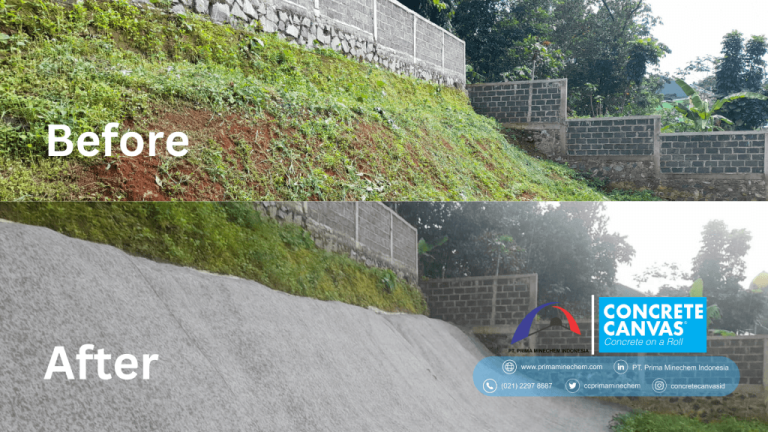
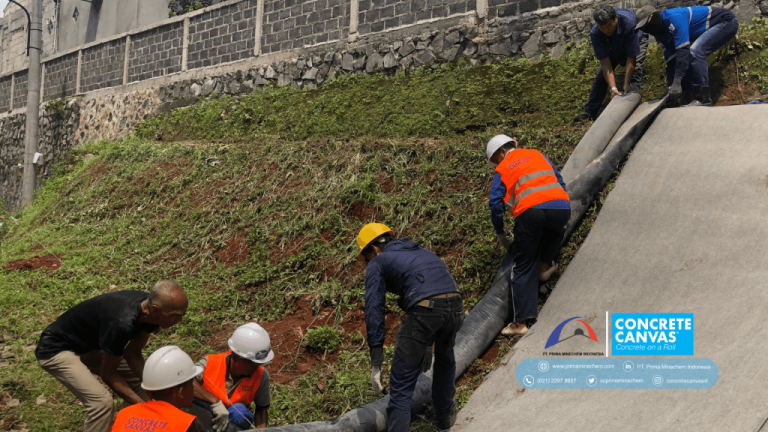
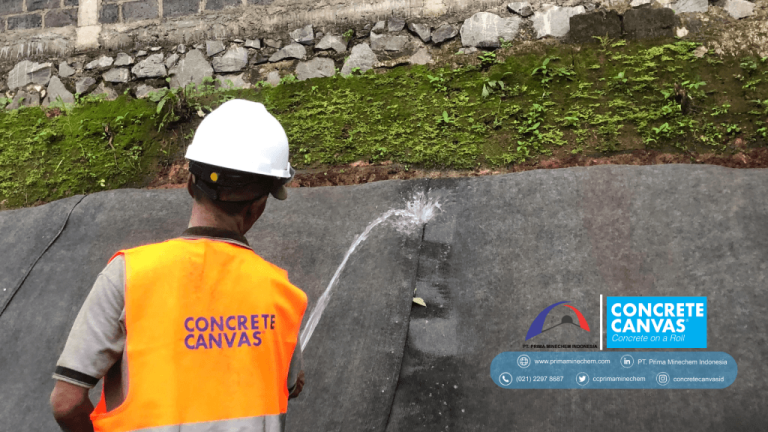
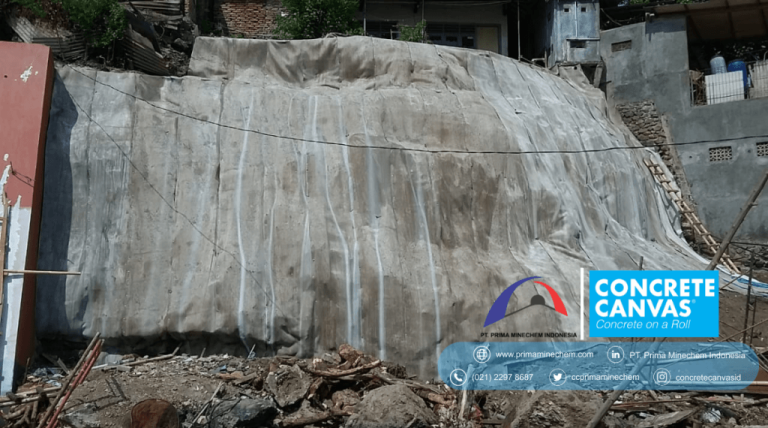
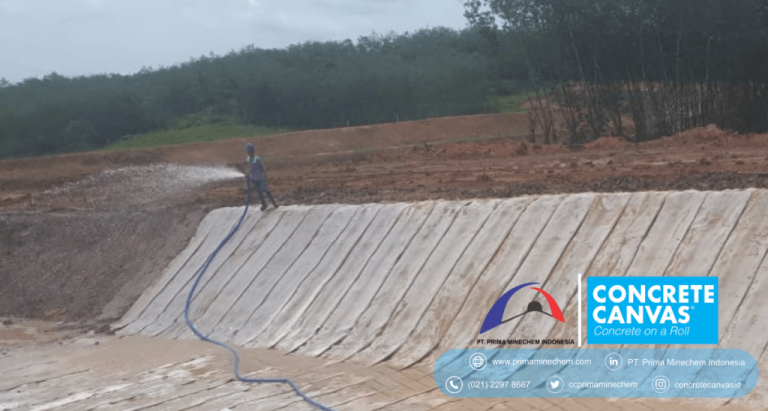
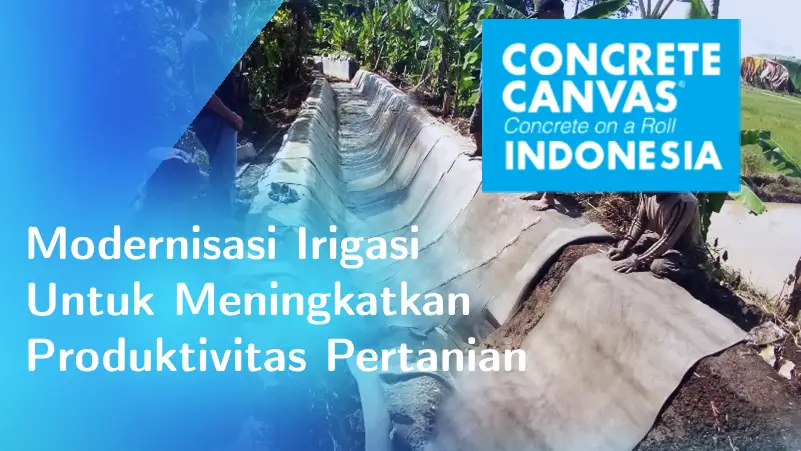
Concrete Canvas is an irrigation channel lining material classified as a Geosynthetic Cementitious Composite Mat (GCCM), consisting of a geosynthetic layer that encapsulates a concrete layer, supported by a geomembrane backing layer at the bottom. Concrete Canvas is easy to install and durable. In addition, Concrete Canvas has high resistance to erosion and sedimentation and is also impermeable to water.
Concrete Canvas has several advantages compared to other irrigation channel lining materials, including:
Lightweight and easy to install. Concrete Canvas is lightweight, making it easy to transport and install. This can reduce transportation costs and installation time.
Durable. Concrete Canvas has high resistance to erosion and sedimentation. This can extend the service life of irrigation channels.
High water-use efficiency. Concrete Canvas can reduce channel leakage. This can improve water-use efficiency.

Modernizing irrigation networks is one way to increase agricultural productivity. One crucial aspect of irrigation network modernization is the selection of irrigation channel lining materials. Concrete Canvas is a suitable lining material with many advantages. Therefore, Concrete Canvas can be the right choice for irrigation network modernization in Indonesia.
Irrigation network modernization is a crucial effort to increase agricultural productivity in Indonesia. However, this effort cannot be carried out by the government alone. Support from all parties, including farmers, is needed to successfully realize irrigation network modernization.
What are your thoughts on irrigation network modernization in Indonesia? What can you do to support irrigation network modernization? Leave your comments below.