Achieving zero-emission targets is a top priority for many countries worldwide, including Indonesia. In an effort to mitigate the negative impacts of climate change and maintain environmental sustainability, new technological innovations continue to be introduced.
One technology that has attracted attention is Concrete Canvas, a construction material that could play a significant role in efforts to achieve Indonesia’s zero-emission target.

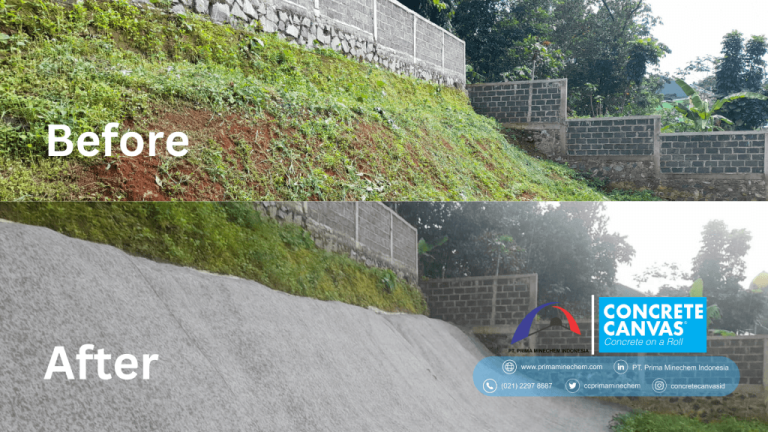
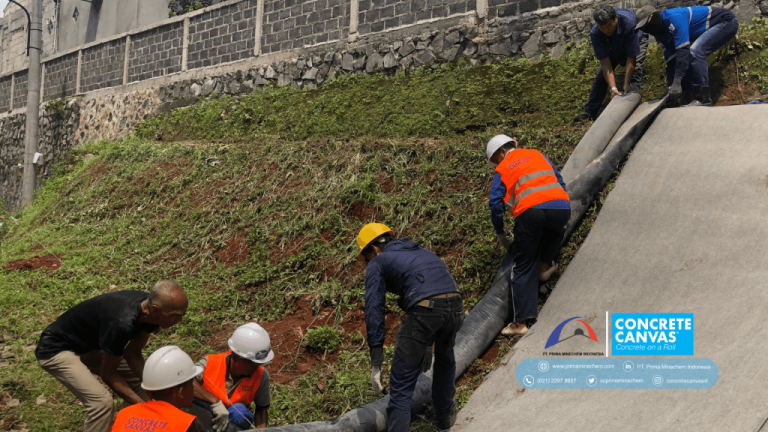
Concrete Canvas is an innovation in the construction world that combines the concept of concrete with ease of installation. Literally, Concrete Canvas is rolled concrete manufactured using a specially formulated cement that hardens within 24 hours after being watered.
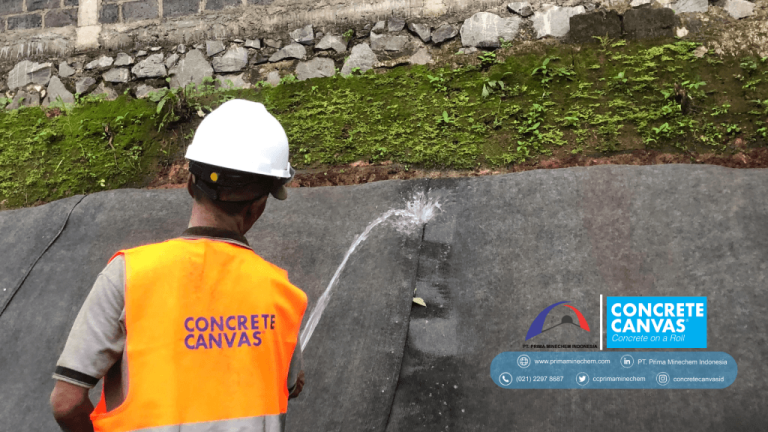
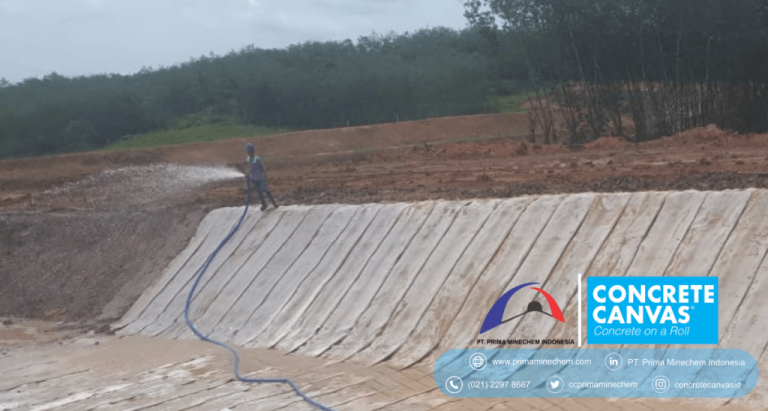
The application process is relatively simple, where Concrete Canvas sheets are installed in the desired area, then wetted to activate a chemical reaction that will harden the material into a solid, concrete-like structure.
Using Concrete Canvas to Achieve Zero Emission Targets
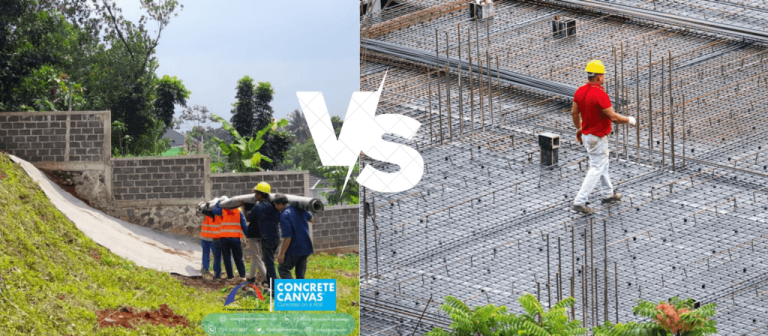
One of the major advantages of Concrete Canvas is its low-emission application. The relatively quick installation process and reduced resource usage compared to conventional construction methods significantly reduce the carbon footprint. This aligns with Indonesia’s goal of minimizing greenhouse gas emissions in its efforts to achieve its zero-emission target.
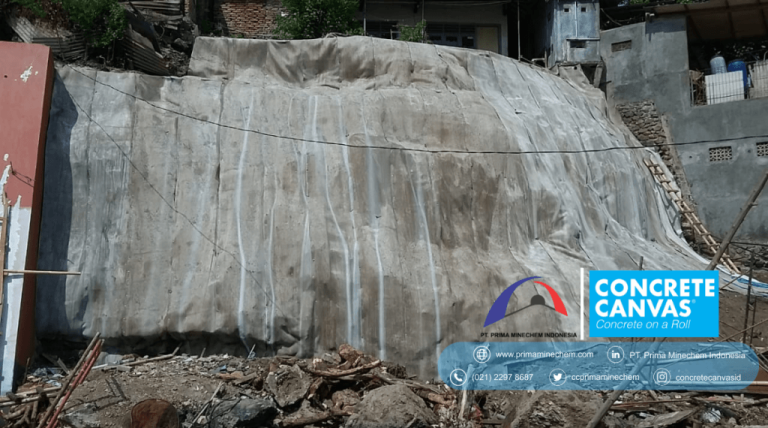
Besides its easy application, it is resistant to extreme weather, corrosion, and temperature changes, making it suitable for use in various infrastructure projects such as embankments, drainage channels, and road slopes. By utilizing durable materials, Indonesia can reduce the need for regular infrastructure replacement, ultimately reducing resource consumption and construction waste.
The mining industry often leaves behind disturbed and unproductive landscapes. Concrete Canvas can be used to reclaim post-mining land, transforming it into more productive areas. This will help restore the environment damaged by mining activities.

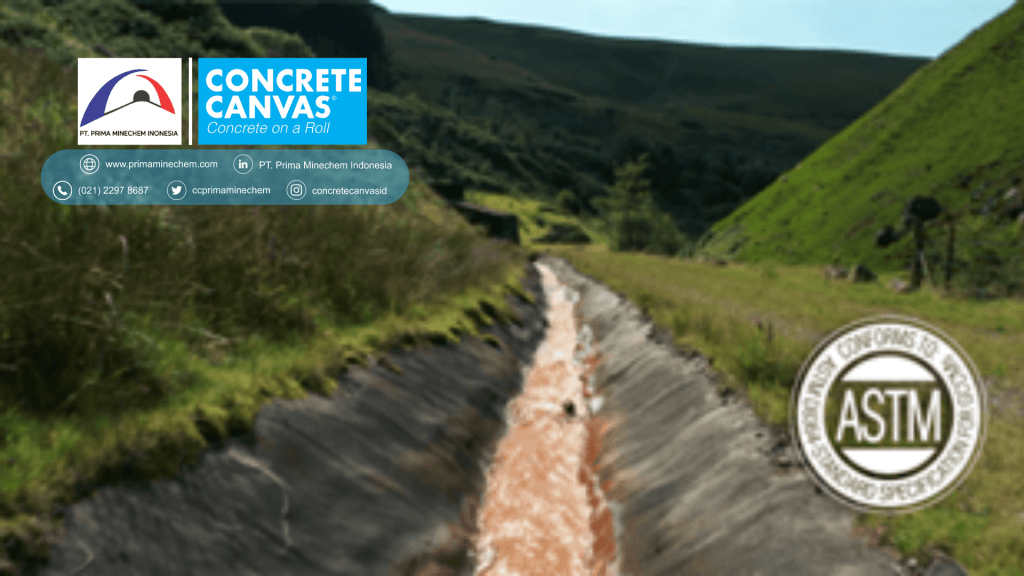
Beyond its use and application, Concrete Canvas’ fibrous top layer is a perfect surface for moss and algae growth, particularly in gutter lining applications where the surface is typically moist and provides ideal conditions for growth. This not only results in the material ‘greening’ over time for a more natural appearance, but it can theoretically help offset CC’s carbon footprint. Studies conducted at the Max Planck Institute found that algae, mosses, and lichens absorb approximately 14 billion tons of CO2 and bind approximately 50 million tons of nitrogen annually .
The use of Concrete Canvas has significant potential to help Indonesia achieve its zero-emission target. With its eco-friendly, durable, and flexible properties, this technology can be applied in various projects that support environmental sustainability and climate change mitigation efforts. By leveraging innovations like Concrete Canvas, Indonesia can build a greener and more sustainable future.
Please feel free to contact our Concrete Canvas team for further consultation and information.